
Splits from Labour: some historical pointers
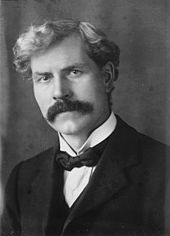
Ramsay MacDonald. Veteran moustache wearer
‘Splitters’ are part of the demonology of the left (perhaps particularly thanks to the electoral system in the UK) while unity (sometimes of the graveyard it seems) is invariably a prize worth having.
It’s true that while in many countries the left has been split electorally between what were termed historically social democratic and communist parties, this hasn’t been the case in the UK. The Labour Party has been dominant electorally speaking since 1906.
Of course the Communist Party stood in elections (and its broad successor still does) and over the years hundreds of Councillors and a handful of MPs were elected. In more recent times others on the left and to the left of Labour have stood with, where there is a strong local base, some occasional success.
Yet as any union officer of a Labour affiliated union (mine isn’t) will remind you the only Government that is going to be elected that will ever do anything useful for working people in the near future is a Labour one.
So the term ‘splitter’ carries a particularly heavy baggage.
The Labour Party as we know it now itself arose not so much from a split as a parting of ways on the left. The Lib-Lab MPs that formed a significant part of the first Parliamentary Labour Party in 1906 were primarily trade unionists of the old craft union school (i.e not New Unionists who were involved with the forerunners of the GMB and Unite) and they certainly weren’t socialists.
Many will have views on exactly how socialist Labour was even when it adopted its 1918 Constitution but Clause 1V was not something Lib-Labs could easily live with (although Labour MPs who had supported World War One certainly could, as could those who did not support it such as Ramsay MacDonald).
MacDonald himself went on to become the first Labour Prime Minister in 1924 but after the crash of 1929 he himself split with a number of other leading Labour figures over the need for austerity. ‘National Labour’ did not fare well at the 1935 Election and faded away, perhaps not least because it had little support amongst grassroots Labour members who have to do the slog at Election times.
That was more or less it in terms of the parting of the ways until the SDP broke away in 1981. There were limited splits in the intervening years- what remained ‘independent’ of the Independent Labour Party departed in the 1930s for example.
The SDP split of 1981 was the most significant of the post-1945 era and remains so, triggered by a parting of the ways on key issues such as NATO, Europe and nuclear weapons. That was in part later reflected by those who did or did not support the 2003 Iraq War, but that also remains a division within Labour.
Support for the SDP was at first high but, under the first past the post electoral system, not quite high enough for it to win many seats in Parliament at the 1983 General Election.
In 1988 the SDP merged with the Liberals to form the Social and Liberal Democrats.
The rest is recent history. Seats were won under Tony Blair’s three election victories but the Coalition with the Tories up to 2015 and now the Tories alone have left the Liberal Democrats with a handful of Parliamentary seats.Not in truth that much to show for all the effort of the 1980s split almost 40 years on.
Historically perhaps the point is that deliberately engineered splits while the electoral system remains as it is probably won’t, over time, do well. Changes in alignment, as took place with Labour either side of the First World War, the current Party structure was in effect largely created by the Webbs in 1918, reflecting changing times and moods may work a little better. However such changes may take time or require a major catalyst like a war.
Practically splitting from Labour or indeed the Tories is a high risk activity with a first past the post electoral system and also if the split comes from MPs more than the grassroots, the foot soldiers of democracy.


Of course splits among Trotskyists is something else. And splits among entrist Trots in Labour is also very interesting. Just hope the membership who support Jeremy Corbyn carry the next General election.
Indeed so. An entirely different subject and with only a marginal relevance here. If as is to be hoped Labour gets elected different positions taken historically may have a little more significance