
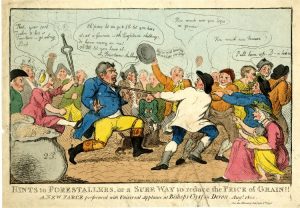
The original moral economy, no mobile phone in sight
EP Thompson developed the concept of a moral economy in the context of eighteenth century pre-industrial struggles over the market and the price and quality of bread. He later accepted that the concept had escaped into the wild and was being used in ways he had not intended. He gave up ‘ownership’ of it on that basis although this didn’t stop him using it himself on occasion (see his essay on the 1972 miners strike in Writing by Candlelight).
The latest use of the concept relates to mobile phones. A summary is below.
The moral economy of mobile phones implies a field of shifting relations among consumers, companies and state actors, all of whom have their own ideas about what is good, fair and just. These ideas inform the ways in which, for example, consumers acquire and use mobile phones; companies promote and sell voice, SMS and data subscriptions; and state actors regulate both everyday use of mobile phones and market activity around mobile phones. Ambivalence and disagreement about who owes what to whom is thus an integral feature of the moral economy of mobile phones. This volume identifies and evaluates the stakes at play in the moral economy of mobile phones. The six main chapters consider ethnographic cases from Papua New Guinea, Fiji and Vanuatu. The volume also includes a brief introduction with background information on the recent ‘digital revolution’ in these countries and two closing commentaries that reflect on the significance of the chapters for our understanding of global capitalism and the contemporary Pacific.


Leave a Reply