
All our yesterdays: The moral economy of Boris Johnson
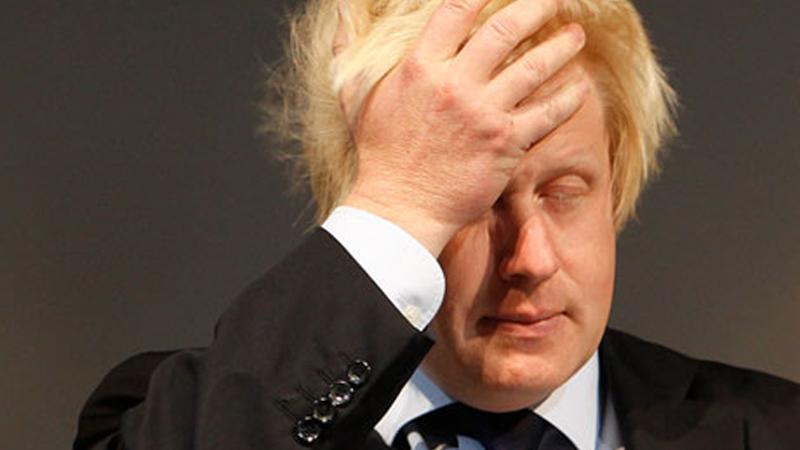
On 2nd October former Minister Boris Johnson spoke at a fringe meeting at the Tory Party conference in Birmingham. He was calling, in effect, for a hard Brexit. That is one that attacks the living standards of ordinary people while Johnson and his wealthy friends like Mr Rees Mogg do very nicely.
The most frequent comment on social media was ‘charlatan’. For is this was the ‘immoral’ Johnson just a few short years ago he had told a completely different story.
In a pre-2015 Election interview with the London Evening Standard on the probably appropriate day of April 1st, Boris Johnson, London Mayor and the then Tory candidate for Uxbridge, spoke of his view of a ‘moral capitalism’.
It can be seen, perhaps, as the equivalent of David Cameron’s modern Conservatism, heralded before 2010 but little seen since.
Academically speaking, as he often reminds us, Boris Johnson is an ancient scholar so it is doubtful if he is aware of the moral economy that was central to the way Britain was run until the rise of industrial capitalism. It was then replaced by the political economy of Adam Smith, essentially capitalism with most of the moral bits left out, although Smith’s view of capitalism was still a good deal more moral than that of Amazon.
The pre-eminent historian of the moral economy is the late EP Thompson. He argued that it represented a contract between an eighteenth century agricultural and industrial workforce and at least some elements of local ruling classes.
It meant that, for example, the prices and quality of staples like wheat, bread, and beer could, if need be, be legally enforced or at any rate influenced by crowd protests that were seen on all sides as legitimate (except by the forestallers who sought to make profit out of unfair prices).
The moral economy here is a conservative traditional culture, sometimes enforced by radical means including on occasion, riot. It involved a recognition not that society was equal or should be so but that the poor were entitled at least to a basic standard of living.
Johnson’s interview with the Standard had some of this understanding.
He argued that wealth creation by capitalists, whatever their intention, is the thing that helps to fund public services. He also says of those self-same capitalists that since they are making good profits they can afford to pay the London Living Wage and not expect the wages of their employees to be topped up by the taxpayer.
Johnson argued that there is a ‘moral purpose to wealth creation’. Adam Smith might have grudgingly conceded the point, the eighteenth-century crowd (who Johnson would probably call the mob) would certainly agree.
Is there anything in Johnson’s period as London Mayor that makes it appear that his moral economy for the twenty-first century is something that he is likely to actually implement if, for example, he became a Tory Prime Minister? Despite his claim that London is now a less unequal City there seems little evidence for it. His support for the London Living Wage was not for example been matched by any actual action to get more employers to pay it.
I haven’t yet had time to trawl E P Thompson’s footnotes for examples of supposed patricians who turned out to be anything but and what happened to them as a result. However I doubt it was pleasant.
Here he differs from his eighteenth-century predecessors. Not only did they support the notion of a moral economy they were, particularly in hard times, prepared to use the law to make sure it was enforced.


Leave a Reply