
The People’s Revenge on the man who sent the Yeomanry in at Peterloo
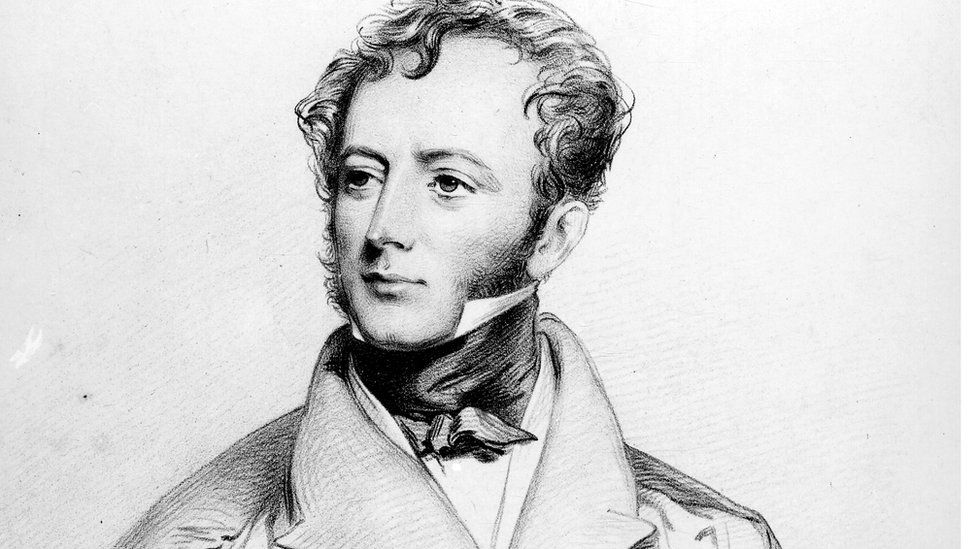
William Hulton (Manchester Libraries)
William Hulton (1787-1864) is not a name that features significantly in British history but the man who held it in the late Georgian and early Victorian periods deserves more recognition as does what eventually happened to the vast estate he owned on the edge of what is now Greater Manchester. It’s thought that the Hulton family may have held the land since as early as 989AD which made it until very recently the longest running land held by a single family in UK history.
Hulton came into his inheritance in 1808 aged 21 and married Maria who bore him 13 children.
Hulton was active as a magistrate before Peterloo and in 1812 at Westhougton 2 miles from his ancestral seat at Hulton Hall, Luddites burnt down a new power loom factory. Hulton despatched summary justice to some of those involved.
Hulton was the Magistrate who signed the order to send the Yeomanry in at Peterloo (and indeed the warrant for the arrest of Henry Hunt) on 16th August 1819. He was a part of a Hulton dynasty (all the male heirs were called William except one, Henry Hulton 1665-1737).
He appears briefly in Mike Leigh’s film of Peterloo, accurately cast according to a contemporary picture as a tall young man with sideburns. The Guardian which was founded as a direct result of Peterloo spent decades labelling him a ‘foolish country squire’. They were too kind.
Hulton was a Tory before anything like the modern Tory Party existed. His mother owned a horse called ‘Church and King’. After the 1832 Reform Act when the Tories did need to organise politically Hulton was one of the founders of the South East Lancashire Conservative Association. He was often touted as a potential Tory MP but never stood for Parliament. There was a problem. Every time he appeared in public at an election the crowd shouted him down with cries of ‘Peterloo’.
The Hulton Estate was for many centuries farming land- 325 acres of it- (and remained so) but during the industrial revolution coal mining developed as a major industrial interest. After Hulton’s death the mines were transferred to the Hulton Colliery Ltd in 1868. Despite a well-known mining disaster in 1910 that killed 344 people by 1947 the Hulton mines were the most significant in Lancashire. At that point they were nationalised.
In addition thanks to coal mining the Hulton Estate had some of the earliest railway tracks in the country with George Stephenson building a rail link to Bolton in 1826.
There was a family home, Hulton Hall, rebuilt on several occasions.
It however no longer stands and the last Hulton, Sir Geoffrey, died in the 1990s according to the BBC.
The Estate was put up for sale in 2010 at a price of £8.5m and bought by property developers.
It is interesting to reflect on what happened to one of the great Tory dynasties in the north of England, undermined as it were, by the 1945-50 Labour Government’s nationalisation of the mines and ending altogether as Mrs Thatcher and John Major were in Office.
The Hulton’s who made their money out of coal mining were ultimately done for by working people voting for a Labour Government in 1945. The impact of the demand for the vote at Peterloo on 16th August 1819 took a long time to have effect on the family of the man who sent the Yeomanry into disperse peaceful protesters, but the impact when it came was decisive.
This post appeared in the Morning Star, 12th November 2018


Leave a Reply