
Brexit, the Peculiarities of the English, Public Schools and the Great Bustard
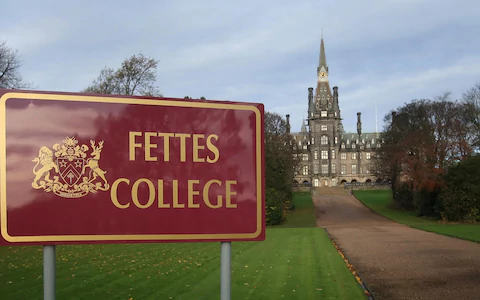
The Observer (13.1) carried an interesting interview with David Kynaston and Francis Green about their new book on the public-school culture of the ruling elite in Britain. The book is published on 7th February.
The article accompanying the interview references E P Thompson’s Peculiarities of the English, although I’m not entirely sure the reference is 100% spot on. Thompson’s point, very broadly, was that while the British ruling class had the appearance of being aristocratic (monarchy, House of Lords etc) in practice an accommodation was reached with the manufacturing industrial bourgeoisie in the second half of the nineteenth century. Perry Anderson famously was not so sure.
The great historian EP Thompson wrote more than half a century ago about The Peculiarities of the English. Historically, those peculiarities have been various, but the most important – and pervasive in its consequences – has been social class. Of course, things to a degree have changed since Thompson’s time. The visible distinctions of dress and speech have been somewhat eroded, if far from obliterated; the obvious social manifestations of a manufacturing economy have been replaced by the more fluid forms of a service economy; the increasing emphasis of reformers and activists has been on issues of gender and ethnicity; and a series of politicians and others have sought to assure us that we are moving into “a classless society”. Yet the fundamental social reality remains profoundly and obstinately otherwise. Britain is still a place where more often than not it matters crucially not only to whom one has been born, but where and in what circumstances one has grown up.
Observer 13th January
The link between public schools and those who are at the top of institutions in British society is inescapable and it may have been a factor in the vote to leave the EU, albeit I suspect not a central one. No doubt leavers could leave with the House of Lords, while (correctly) demeaning it if they had an acceptable standard of living. Some remain voters may have had a similar view of course.
Thompson saw English culture as being akin to the Great Bustard, a bird that no matter how much it flapped was confined to British soil (and is now extinct).
Thompson saw something of the Great Bustard in himself:
But I cannot fly. When you spread your wings and soar into the firmament where Kierkegaard and Husserl, Heidegger, Jaspers and Sartre and the other great eagles soar, I remain on the ground like one of the last of the great bustards, awaiting the extinction of my species on the diminishing soil of an eroding idiom, craning my neck into the air, flapping my paltry wings. [13] All around me my younger feathered cousins are managing mutations; they are turning into little eagles, and whirrr! with a rush of wind they are off to Paris, to Rome, to California. I had thought of trying to join them (I have been practising the words “essence”, “syntagm”, “conjuncture”, “problematic”, “sign”) but my wings grow no bigger. If I were to try I know very well that with my great bulk of romantic moralisms, my short-sighted empirical vision, and my stumpy idiomatic wings, I would fall – plop ! – into the middle of the Channel.
Beyond public schools the historic nature of the British State and the implications of that for the modern British State, debated by EP Thompon, Perry Anderson and Tom Nairn in the 1960s is moving central stage in wider discussions on Brexit


Leave a Reply