
Glasgow George Square January 31st 1919: striking for the 40 hour week. The importance of historical memory
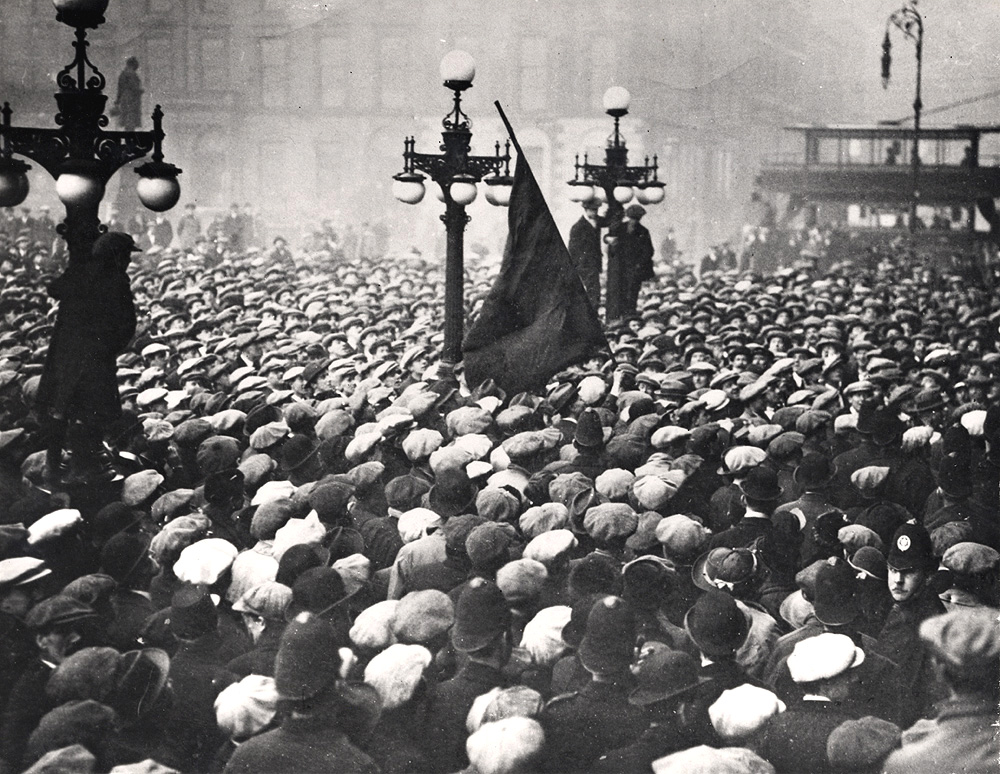
It is the hundredth anniversary of one of the more important moments in British working-class. Hopefully some are familiar with key dates like Peterloo, or the Newport Rising, the 1926 General Strike (which 1919 was a precursor to) and in more recent times the miners strikes of 1972, 1974 and 1984/5.
Yet what took place on the last day of January in Glasgow 100 years ago is perhaps less well remembered at the moment. This wasn’t always the case. When I started out in the labour movement in the 1970s, it was a well-known date and some of those who had been there, for example Harry McShane (who I had the privilege to meet and hear speak) were still alive.
The events of the day and what they meant are very well described by John Foster here:
https://morningstaronline.co.uk/article/f/strike-changed-nature-labour-politics
In summary the Clyde Workers Committee, the Scottish TUC and others had called a strike for the 40 -hour week. It was an important industrial and political demand. With the First World War at end soldiers were returning home and looking for work. One of the most effective ways to create jobs was to limit the working work. Further the soldiers had been promised a better world when the war ended.
The demonstration in George Square Glasgow on 31st January 1919 became known as Bloody Friday because it was attacked by the police and the army was on stand-by. The Government feared that a movement was building that could lead to something similar to the 1917 Russian Revolution in Russia.
Foster makes the important point that not only did the 40-hour strike continue after 31st January but it spread to Belfast, northern industrial towns like Barrow and to London and the south where the railways ground to a halt. The Government which had been intending to renege on its promises of reforms in education and housing instead went ahead with them.
Foster makes the point that serious attempts were made by the authorities to break the Glasgow strike. However the strike was organised not just in the workplaces but in the communities too and picket lines were defended by mass turn-outs of workers and local people.
They were inspiring times because it showed how workers could organise, fight and win some positive change. The battle against austerity could do with much of the same approach.


Nice post, and good to have the link to Foster’s piece. The photo, though, is not from 1919. The image is of a tank which (like the crowd) was in Glasgow city centre for a fund-raising event, in 1918.
The image is from the BBC and has been up since the 2009 anniversary. I’ll change it later today