
The February 1974 General Election: periods of upheaval in post-1945 Britain
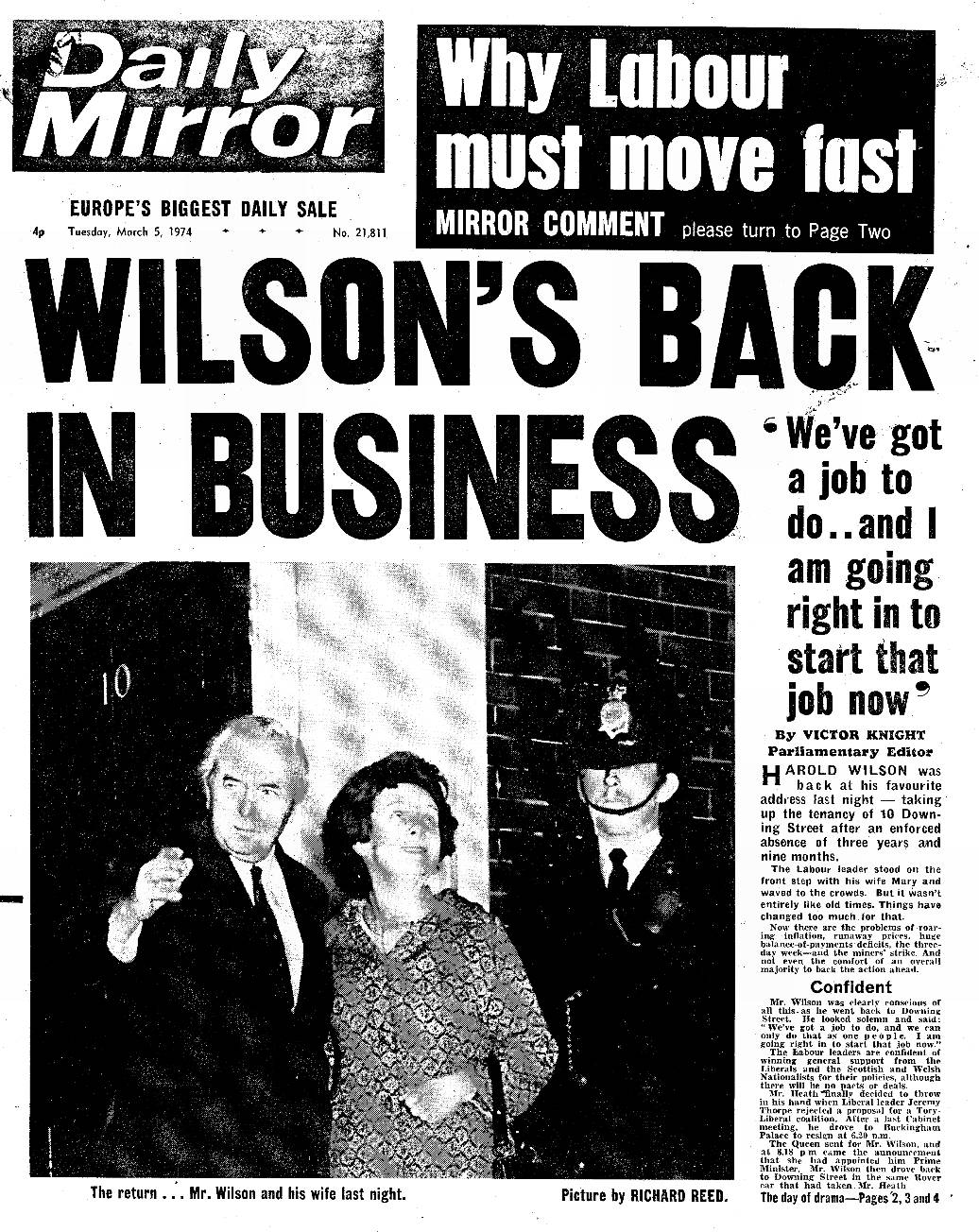
It is 45 years since the General Election of 28th February 1974 which was narrowly won by Labour and started a process that led to the first Referendum on the then EEC (now EU) in 1975.
That however is far from the only connection between Brexit and 1974.
Opinion is divided on the impact of Brexit. Hard line Tory leavers have long had plans to weaken labour and social legislation outside of the EU, although many might think that this in fact exactly what they have been doing anyway since 2010. Hard line remainers are keen on the progressive values of the EU something which may have escaped some other EU countries like Greece.
The media meanwhile is full of stories about shortages of food, medicine and so on should Brexit happen without a deal.
These stories and support for them are based on the idea that things are broadly ok as they are. Many who have suffered under the austerity years know that is not true and wonder how much worse, if at all, Brexit could make things. They may of course find out.
Brexit would certainly mean an upheaval of some kind in the way that British capital organises itself but any change in society, including potential moves to a fairer society under a left-wing Labour Government will involve disruption to the status quo.
There are historical parallels and there is a failure of historical memory to recall for example the 1973 oil crisis or indeed the February 1974 Election.
Tory Prime Minister Edward Heath called the Election on 7th February 1974 and on 10th February the miners who had been involved in an overtime ban began an all-out strike. Heath had imposed a three-day working week from 1st January 1974 which meant that all non-essential commercial premises were limited to three consecutive days of electricity in any week. At the same time TV which had had to shut down at 10.30pm every night was allowed to broadcast for longer throughout the Election campaign. Inflation figures announced on 15th February revealed a 20% increase in prices over the previous year.
Heath’s focus in calling the Election was to confront the trade unions and labour movement directly with the slogan ‘Who Governs Britain?’. The Tories attack on the Labour Manifesto may sound familiar to those used to the Corbynphobia of much of the media 45 years on.
The Tories in 1974 claimed that ‘Labour today faces the nation committed to a Left-Wing programme more extreme than ever before in its history’.
The outcome of the Election on 28th February revealed a polarised nation split down the middle. No doubt today centrists would be arguing that faced with a Tory Government that had introduced a three-day week and shut down TV early Labour should win a massive majority. In reality Labour got 301 seats to the Tories 297. Liberal leader Thorpe was unable to reach agreement on propping up Heath, unlike Clegg several decades later, and Harold Wilson headed a minority Labour Government.
The answer to Heath’s question as to who governed Britain, the Tories or the trade unions, had produced an interesting response. The miners got a 35% pay rise but 10 years later in 1984/5 the Tories took their revenge.


Leave a Reply