
The size of the crowd: Trump in London 3 & 4 June 2019
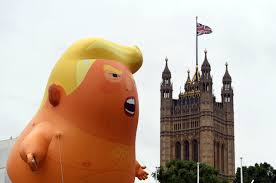
The size of crowds continues to be the subject of much discussion both in the media and in academia.
Indeed I came across an academic who is probably best described as a risk management professional who aims to look at the size of projected crowds to make sure there are no safety issues. A sensible idea no doubt but not something you can project back into history when ideas of how many people could fit into a particular space were different.
Even after the Chartist demonstration on Monday 10th April 1848 there was argument about how big the numbers might have been based on an assessment of how large a space at that time Kennington Common was. And that argument is still going on 170 years later.
This brings us to the numbers who were protesting about Donald Trump or supporting him on his State visit.
Whatever Mr Trump may have been told the numbers who turned up to view the procession of his car (note not ceremonial coach) to Buckingham Palace on Monday were, well, close to no one. There were certainly more police officers and pigeons.
When Trump was last here in July 2018 there was a very large, perhaps 250,000 strong, central London demonstration on a rather warm Friday afternoon against him and his politics. The leader of the opposition Jeremy Corbyn spoke, although the entire media and some Labour MPs managed to forget that in the 11 months since. Even short-term historical memory is becoming an issue now it seems.
That made it possibly the largest week day protest in UK history. Another contender was the demonstration when George W Bush came to London in November 2003 not long after the Iraq War:
http://news.bbc.co.uk/1/hi/uk_politics/3223780.stm
The demonstration on Tuesday 4th June against Trump which moved from Trafalgar Square to a rally in Whitehall was not as large although there were certainly very decent numbers present particularly for a late morning mid-week protest, around 75,000.
Could it have been even larger given how much Trump is hated? If there was a precise answer I wouldn’t be writing historically focused pieces about crowds and their history but instead have made my millions in the predictions business and retired.
Some possibilities are that it was an 11am start on a Tuesday meaning it was probably a bit more difficult for those in work to get there than say a late Friday afternoon. Many jobs involve working 5 or more days over variable patterns but in the world of professionals where I’m a union officer the working week in an actual office tends to be Tuesday to Thursday and that is a big factor in terms of London employment, which will always supply the majority of protesters on any demonstration. They can just turn up, mostly, few special arrangements to travel etc are required. However Tuesday might be more difficult than a Monday or a Friday.
The weather probably didn’t help either. The forecast was for sun and showers but in fact changed to some rather heavy downpours. One reason why the Chartist demonstration on 10th April 1848, however big it was dispersed so quickly was that it rained in the early afternoon.
Finally it may be that some have just go ‘demo fatigue’ when it comes to Trump. Pretty much every one but him knows he is hated and some may think the point has been made.
In my view you can never make it too often but I’m trying to understand protest crowds here not argue about why people should protest.


[…] https://kmflett.wordpress.com/2019/06/07/the-size-of-the-crowd-trump-in-london-3-4-june-2019-part-1/ […]