
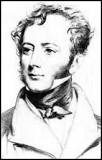
Below is an extract from a review by E P Thompson in the Times Literary Supplement of a book published to mark the 150th anniversary of Peterloo in 1969. Peterloo: the case reopened by Robert Walmsley sort to rehabilitate the reputation of William Hulton the Magistrate who gave the order to send the Yeomanry in at Peterloo. Thompson as can be seen below did not agree with Walmsley
Tribune Magazine has reprinted the entire review to mark the 200th anniversary of Peterloo
______________________________________________________________________________________________________________________________
William Hulton had some sort of stiffening about him which some of his fellow magistrates lacked – an absence of humanitarian cant and a contempt for general opinion. He offered no maudlin apologies for Peterloo; indeed, he later recalled it as the “proudest day” of his life, and many years afterwards he kept a Cap of Liberty, captured upon the field, in his study. A gentleman of Hulton’s breed and station does not lie; he merely has so great a hauteur, so great a distance between himself and the seditious plebs, that it is a matter of utter indifference to him whether this or that is true of them or not.
Twelve years after Peterloo, and after fact upon fact had been disputed for as long, Hulton could throw off a public letter containing a manifest farrago of mis-statements about the day – “two people were killed in St Peter’s Field – one, a woman, who having personated the Goddess of Reason, was trampled to death in the crowd … On the succeeding day, an old pensioner was beaten to death with portions of his own loom, because he had expressed a loyal attachment to the King.” He was as inflexibly convinced, in 1831 as he had been in 1817, that the defence of “this vast aegis” of our liberties required the hunting of Jacobins and the sharpening of swords.
The defeat of the Tories in South Lancashire in the Reform election of 1832 led only to an adjustment of tactics. “A few despondent individuals”, Hulton of Hulton later recalled, then met in a common pot-house in Newton-le-Willows: “It occurred to them that it was their duty to call up every friend to the monarchy and the Church to counteract the machinations of the enemies to both.”
As a result of that meeting, “the foundations of the South Lancashire Conservative Association were laid … and from that stem at Newton, Conservative associations had branched out all over Her Majesty’s dominions.” It is well to remember that British Conservatism has not only been made by the great, the well-endowed, the fluent. It has also had its stubborn, provincial grassroots.


Leave a Reply