
A very British Coup takes an interesting turn
Britain is not a Parliamentary Democracy but a Constitutional Monarchy which means that ultimate political power rests with the monarch.
Recent events have acted as a reminder of the point. The general view is that while this may be the formal position it is not something that the Monarch actually does in practice. This view is repeated in the report below
This merely serves to remind us that too many journalists are either historically ignorant, and lack curiosity and indeed time, to understand modern history, or just aren’t interested in decent reporting anyway.
The modern precedent is the dismissal of the Australian Prime Minister Gough Whitlam by the Governor General in 1975. As the Wiki entry makes clear the Queen was well aware of what took place but officially played no role.
https://en.wikipedia.org/wiki/1975_Australian_constitutional_crisis
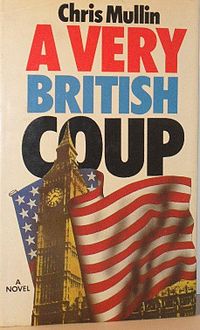
Chris Mullin’s 1981 novel A Very British Coup imagining the removal of a Benn style Prime Minister had in mind the Gough Whitlam story
https://en.wikipedia.org/wiki/A_Very_British_Coup
It would be an irony indeed if it ended up that the UK Prime Minister to be removed from Office in what Jacob Rees Mogg would no doubt describe as a constitutional coup was not a left-wing one but rather a right-wing one.
The passage of the Letwin Amendment in the Commons on 19th October in effect that to comply with the ‘Benn Act’ Johnson must ask for an extension to his declared timetable of leaving the EU by the 31st October. However he has said he wont do that. A General Election is an obvious way to address this, and one wonders if Parliament doesnt do that, if, as in 1975 in Australia, it will be directed from above


Leave a Reply