
On Birthdays, Anniversaries & Historical Periodisation
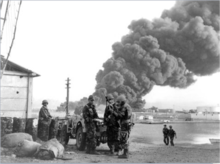
Today is my 63rd birthday (I was born on 31st October 1956 in the midst of the Suez and Hungarian crisis and I’ve never liked imperialism of any sort since).
I will celebrate it with my partner Megan but while I’m certainly not averse to celebration, I do struggle a bit with the birthday side of things.
Until 2010 I would have had to retire at 60 come what may. That is now gone and I can go on and on. I already do in fact.
Otherwise I’m not sure that getting older is something worth making much of a fuss about it, except if you are rather young.
You can find all manner of confused ramblings on the interwebs about when birthdays were first celebrated and why. Leaving aside the – many- who apparently want to prove its all laid down in the Bible (we can indeed agree God is very old, just look at that beard) a summary is probably that at least some of the rich and powerful have marked their birthdays since ancient times (i.e BC).
Most of the rest of us until quite recently have not. A fellow historian pointed out to me that we don’t actually know how old Shakespeare was for example. It was not something of sufficient importance to record, it would seem.
The recording of births and deaths, in some countries, formalised the picture as industrial societies developed although there is no degree of accuracy where much of a population was illiterate.
The thinking behind this- pace the Census- was to record population, review mortality figures and so on. In any society that is going to attempt to plan things this is essential information.
None of that really suggests why we should celebrate getting older at a particular time each year rather than as personal landmarks-partnership, marriage, divorce, retirement- are reached.
Historically time frames can be more flexible based on something similar to this. Historians talk of research, for example, into the long eighteenth century, while Eric Hobsbawm argued the nineteenth really ended in 1914.
As an historian I do ponder anniversaries though. 100 or 50 year distances for example can provide an interesting perspective- but not always. We are for example in the year of the 200th anniversary of the August 1819 Peterloo Massacre and this weekend, the 180th anniversary of the Newport Rising. That will certainly be marked but quite how widely depends on its contemporary resonance.
So in summary I do think the passing of time is worth both recording and marking but not in a mechanical way. Whether something is worth recalling let alone celebrating depends a lot on the context.
History forgets too much and remembers things that probably are not worth remembering


Very interesting article, with which I am in full agreement.Born 28-6-1940 I was 16 at time of Soviet suppression of Hungary & UK/France/Israel invasion of Egypt. Like you they made me a strong anti imperialist. I would rate the Suez fiasco the stupidest act of British foreign policy of the 20th century, though there are many other contenders.My personal bette noir was the signing of the entente cordial, as a result of Edward 7th liking a bit of leg over in Paris. This I believe contributed to UK being drawn into WW1 joining imperialistic France & Russia v imperialistic Germany & Austro-Hungary. David Watts Living October- March Chiangmai April-September near Cardiff where believe you spend a lot of your time.
Sent from Yahoo Mail for iPad