
After the High Court rules CWU ballot invalid, a history of what happens to bad union laws.
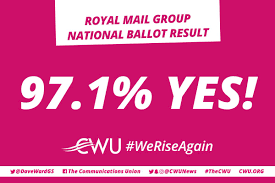
On 13th November after a challenge by the Royal Mail a judge ruled that a CWU ballot for industrial action which had not only passed the 50% turn-out on a postal ballot requirement by some distance but also secured a very large ‘yes’ vote was unlawful.
The CWU are to appeal.
The current law on industrial disputes is a bad law and it is designed to be a bad law. The aim is to make it is as difficult as possible to take lawful industrial action.
One way to address that is simply to take action anyway, but historically bad employment law has not remained on the statute book for ever.
It is interesting to look very briefly at what happens to Trade Union Acts.
The 1927 Trades Disputes Act passed in the wake of the General Strike, banned secondary action and mass pickets and made union members opt in (as opposed to opt out) of the political levy. It was repealed on 22nd May 1946 by the Attlee Labour Government.
The 1971 Industrial Relations Act, which was ‘sort of’ related to the earlier Donovan Commission on unions limited the right to strike, made trade unions register to operate legally and set up a National Industrial Relations Court. It was repealed by the 1974 Labour Government and replaced with the Trade Union and Labour Relations Act.
Under the Thatcher Governments form 1979 a number of Trade Union Acts were passed. These were not repealed by the Labour Governments from 1997 but instead a new Employment Relations Act was passed in 1999 which addressed the right of unions to recognition by an employer and outlined a series of rights for union members, including a ban on blacklisting.
The historical point is obviously that while trade union laws can be reduced to ineffectiveness by active opposition to them (the Tory union laws post 1979 were not much used) they are only repealed when a Labour Government is in office, Notably however that didn’t happen after 1997 but an alternative approach of passing additional legislation was taken. It might be argued that while this had an impact, repeal might have been the better option..
Hopefully on 12th December a Labour Government will be elected that will get rid of Tory laws designed to frustrate the legitimate democratic intentions of people at work who want and need to challenge the actions of their employers and replace them with positive employment rights instead


Leave a Reply