
BBC bias & the Peculiarities of Boris Johnson
I don’t listen to BBC news on the radio or watch it on TV (I do look at the news website). I’m on the left and I find much of the news as reported slanted towards the right.
Does this mean the BBC is biased? Not necessarily. It could just mean that I don’t like hearing views that aren’t my own.
Actually though, whether I do not, as a trade union officer, hearing views that are not my own and dealing with them professionally is part of what I do.
There are several points to be made here.
Firstly part of the problem I have with BBC News (and indeed much of the 24 hour news culture) is that somewhere along the line it has become acceptable and commonly practiced by at least some journalists to add their personal views to a news report. They of course can have their own views but they are also meant to be professionals who keep such views for other times.
Secondly and more complex is the question of whether the BBC is biased towards the Tories. Currently I think it is (see my Guardian letter below 6.12). However it is a matter of institutional bias. There is an assumption towards the Government of the day, and against change, until change happens.
This attitude has deep historical roots in British culture and can be found in many areas where change is discussed. If there is no clear agreement on change then whoever is presiding will rule in favour of keeping the status quo.
Whether this remains appropriate in 2019 or whether a change is required is worth discussion.
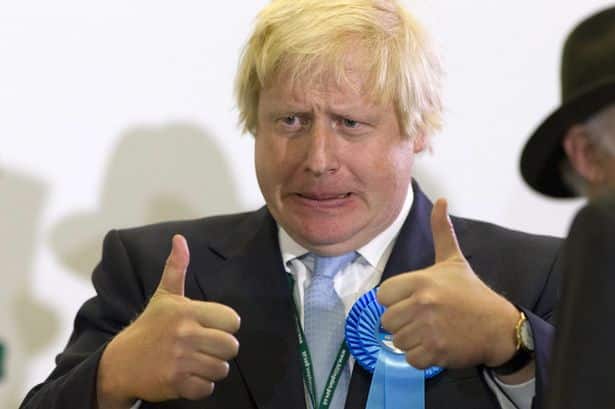
It is certainly what lies behind BBC journalist Andrew Neill empty chairing Boris Johnson (5.12) for failing to appear for a pre-Election TV interview.
Neill made it clear that in every other recent election all party leaders had been interviewed and this was seen as part of a democratic practice of calling them to account,
In other words Johnson had stepped outside of the parameters which indicated that his Government would get treatment as that of the existing status quo.
Letter 6th December
Peter Oborne is right to call out Conservative bias in the BBC’s election coverage (In this election, the BBC has let down those who believe in it, Journal, 3 December) and likely to be right too in his assessment that the reasons for the bias are institutional, beyond the prejudices of a few well-known reporters. Put simply, the BBC tends to be more sympathetic to the status quo and the government of the day than political change.
Yet behind all that lies the hard work of thousands of professional BBC employees out there reporting and producing news on a wide range of matters that the printed media no longer often does.
As with the gender pay gap at the BBC, perhaps it’s time for those at Broadcasting House to listen more to their employees and their trade unions and less to the politicians of the moment.
Keith Flett
Link to full letters:
https://www.theguardian.com/media/2019/dec/05/the-bbc-cannot-dodge-accusations-of-tory-bias


Leave a Reply