
Once again on 1983
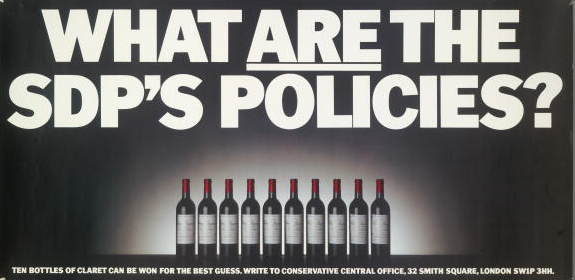
There is discussion that Labour’s Election defeat on 12th December reflects that of 1983. In most cases its not a genuine discussion but simply an attempt by the right in the Labour Party and movement to assert that only their ideas can win Elections.
That is historically inaccurate (of course). I was no fan of Harold Wilson but he won 4 Elections for Labour and he was not on the right of the Party (which however was hardly the central matter of his Premierships)
Andy Beckett makes useful points about the differences between 1983 and now in the Guardian:
https://www.theguardian.com/commentisfree/2019/dec/19/left-labour-michael-foot-tony-blair
There is no question that Mrs Thatcher defeated Michael Foot’s Labour in the 1983 General Election and did so fairly resoundingly
According to a Radio 4 Archive Hour programme on the subject in 2013, the Labour Election campaign was shambolic and Foot, while appealing to some of Labour’s core vote, failed to connect to a wider audience. A similar theme appeared in some coverage of the 2019 Election about Jeremy Corbyn, often from people that also thought Ed Miliband and Gordon Brown were definitely unelectable as well.
In fact Foot won 8.4 million votes achieving 27.6% of the poll which was certainly on the low side. Labour has often topped 10 or 11 million votes in General Elections (as it did this year) and on occasion higher. It is worth reflecting however that in 2010 Labour got 8.6 million votes and 29% of the poll.
The reasons for Labour’s failure in 1983 have however been pinned on the Manifesto dubbed ‘the longest suicide note in history’. It is certainly long- manifestos tend to be even now- but the notoriety relates to its political position.
It was a manifesto of the left, or one kind of left anyway. Its focus on managing the British economy and tackling high unemployment hardly seems that controversial now. Rather it was the attacks on it by Mrs Thatcher and those that had split to the SDP that framed it in this way.
Thatcher, who used to bang on in much the same way as George Osborne once did with absurd comparisons between individual household borrowing and the national debt attacked the manifesto because it openly said that money would need to be borrowed to stimulate economic recovery. New Labour got around this charge of economic mismanagement in 1997 by saying it would stick to Tory economic limits…
The SDP (now part of the LibDems) meanwhile were upset by things such as the call for Britain to leave the Common Market. One doubts Nigel Farage read the 1983 Labour Manifesto but it reminds that the demand to depart the EU has been as strong in parts of the left as it certainly is on the right and was arguably more coherently put at that time than in recent years.
Other bits of the Manifesto now seem to be amazingly good sense. For example it says the banks will need to be regulated to make sure they lend and invest. It also proposes to set up a Foreign Investment Unit to keep an eye on what multinational companies operating in the UK were up to.
Whether you think scrapping British nuclear weapons is a good idea or not (I do with alternative work for the skilled workers concerned) it was part of the 1983 Labour Manifesto and continues to be contentious issue.
EP Thompson (who wrote a pamphlet for the 1983 Election, The Defence of Britain) noted in his introduction to the Making of the English Working Class that causes that were lost in nineteenth century Britain might yet be won in other places and at other times.
Michael Foot may have been thought too old to lead the country by some, but some of the ideas in the 1983 Manifesto were it seems 30 odd years before their time…
The irony of course was that Mrs Thatcher won in 1983 on an equally radical Manifesto, but of the right rather than the left. When the history of the period begins to be written by historians other than Dominic Sandbrook we may come to understand a bit more about the longer term significance of that


Margaret Thatcher certainly won the 1983 election in that she won the most seats in the House of Commons – the Tory seats went up from 339 to 397 – but, in fact, the number of votes cast for the Conservatives fell slightly, from 13.7 million to 13.01 million. Their share of the vote fell from 43.9% to 42.4%.
It would be more true to say the the opposition lost, with the vote being split, almost equally, between the Labour Party and the Liberal-SDP Alliance.
In fact, the Labour Party never gained the share of the vote they received in 1979 (when they lost the election) until 1997.