
Charles Dickens Christmas Carol & Toryism in 2019
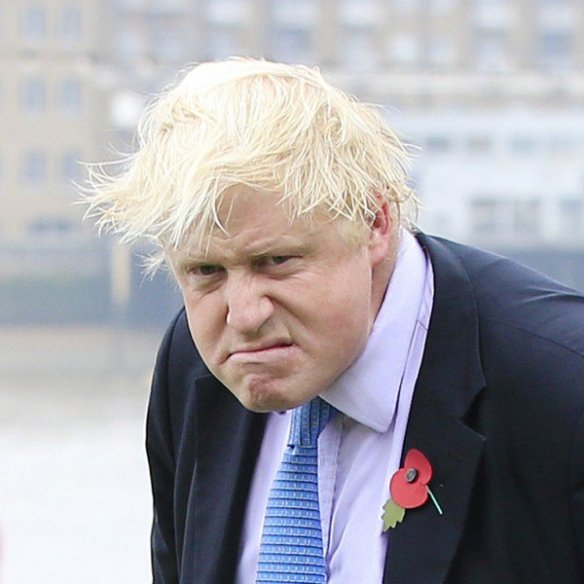
At one of the few TV Election debates Boris Johnson did manage to appear at, Jeremy Corbyn said that he would give Johnson a copy of Charles Dickens Christmas Carol as a Christmas present.
Needless to say this got the Daily Telegraph going. Melanie McDonagh opined that there was nothing socialist about Dickens or about the book in particular. She was certainly right about that but as several comments underlined she had failed to grasp the point Dickens, and indeed Corbyn, was actually making.
It was a point that gained added poignancy in the last days of the Election campaign. A reporter attempted to show Johnson a picture of an unfortunate child who was sleeping on a floor at Leeds General Hospital overnight due to a bed shortage. Instead of looking at the picture and at least empathising, Johnson snatched the reporter’s phone and put it in his pocket.
A Christmas Carol was published as a hardback book shortly before Christmas 1843. The Guardian carried several adverts for it, price £5. While the book was a best seller, it was not aimed at a mass audience. The top weekly wage in 1843, according to Engels in The Condition of the Working Class was £1.30p.
Rather Dickens audience was amongst those he was directly criticising.
His criticism was not of wealth or the making of money as such. Dickens, himself a wealthy man, had no issue with this.
His point was that for those who had wealth, ‘the haves’ there was a certain obligation to the ‘have nots’. He did not advocate expropriation of Scrooge’s money or his business.
Rather a Christmas Carol’s point was that where the well off knew that the less well off were going without they should not ignore it. They should certainly not proclaim as Scrooge does that it is their own fault. Rather they should make sure that where they are directly concerned that provision was made, in this case for a decent Christmas for Scrooge’s clerk and his family.
Before writing the book Dickens had wandered central London and Manchester to see for himself people in dreadful conditions, sleeping rough in makeshift shelters and with not enough to eat. He might, as numbers of well off Victorians did, have shrugged and thought that this was the inevitable reality of a market capitalist society.
He didn’t however
Instead Dickens attacked the Malthusian idea that there is only so much wealth in society and that the poor exist because of that and there is nothing much to be done about it.
We can see the parallels with Johnson’s Leeds hospital incident clearly.
Even if one accepts that Johnson has good intentions towards the NHS, which Star readers myself included would clearly see as far-fetched, the issues of under-funding, under resourcing and under staffing in it can’t be sorted out in a day.
However where there are specific cases of hardship, and where, in this case, they are brought to Johnson’s notice, he has an obligation not to ignore them but to act.
The fact that he didn’t, may mean, if Dickens story is to be followed, that he faces several disturbed nights while three apparitions remind him that there is such a thing as society. If those took the shape of a distinguished chap with a beard, so much the better
Johnson may have won the Election but like Scrooge unless he addresses his own shortcomings, which unlike Scrooge, seems very unlikely, his past actions will continue to haunt him
This post originally appeared in the Morning Star


Leave a Reply