
London Socialist Historians Group
26th February
Contact Dr Keith Flett 07803 167266
Historians say discovery of Chartist graffiti in the Commons reflects long history of organised labour
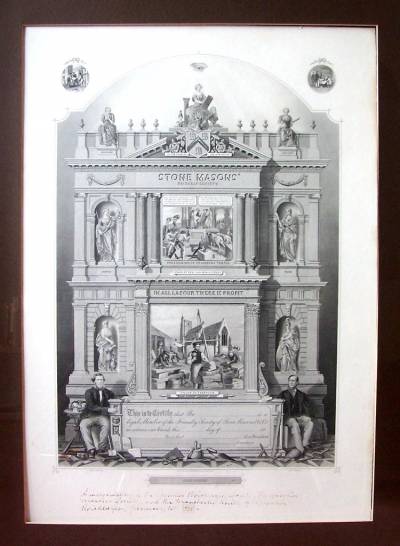
The London Socialist Historians Group which organises the socialist history seminar at the Institute of Historical Research at the University of London, Senate House has said that the discovery of graffiti written by a Chartist stonemason in 1851 while the House of Commons was under construction (having been destroyed by fire in 1835) reflects the militancy of nineteenth century London stonemasons
The discovery was made by builders engaged in renovating the Commons who found a previously blocked passageway dating back to 1660:
https://www.bbc.co.uk/news/uk-politics-51630630
The London Stonemasons had engaged in a lengthy strike from September 1841 that stopped work both on the construction of the new Commons building and Nelson’s Column. The architect for both was Sir Charles Barry, as was the building firm used Grissell and Peto.
The Stonemasons issue was rude and abusive behaviour by foremen employed by Grissell and Peto.
The reference in the graffiti to ‘real democrats’ suggests that while the stonemasons were Chartists they were probably allied to a Chartist group known as the Fraternal Democrats. This was led by George Julian Harney whose Red Republican paper had carried the first English translation of the Communist Manifesto the previous year.
London Socialist Historians convenor Keith Flett said, it is a fascinating historical discovery and a reminder that workers were organised and with left-wing politics long before either the Labour Party or the TUC were features of the political and industrial landscape


Leave a Reply