
Huddersfield 31st March/1st April 1820: the start of a season of armed risings
Following the failure of Cato St in London on 23rd February 1820 where a plot to kill the Cabinet was foiled by Government agents and the army, the reaction to the Peterloo Massacre on 16th August 1819 rolled on.
It may be that the introduction of the Six Acts at the start of 1820 which severely constrained democratic political activity shifted the emphasis on radicals minds to armed activity.
The event that sparked a whole series of attempted risings and a General Strike in Scotland took place on the night of March 31st/April 1st in Huddersfield.
There is an excellent account of the wider Yorkshire picture by Fred Donnelly here:
His account of the events in Huddersfield is below
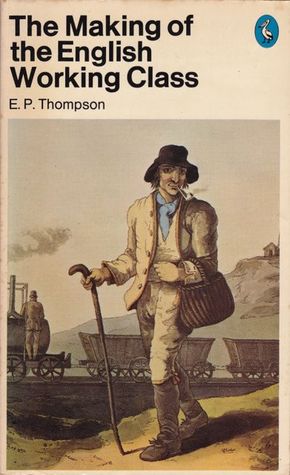
Frank Peel a local mid to late Victorian historian of the area wrote about the rising in his book Spen Valley Past and Present. E P Thompson comments in detail about Peel’s historical method in his January 1968 introduction to a new edition of Peel’s book The Risings of the Luddites. Thompson argues that Peel is a credible historian. While relying on oral testimony from people many decades after events took place he carefully checked accounts against records.
Even so as Thompson also underlines what went on at Huddersfield 205 years ago this week was done covertly. It was meant to be secret, organised by word of mouth and accounts or plans by participants did not appear for that reason.
Peel writes:
On the night of 31st March 1820 a simultaneous rising was appointed to take place across the West Riding. Emissaries from clubs and other political and trade organisations had been flitting about the Spen Valley and beyond for a long time, most of them hailing from Barnsley, which may be regarded as the headquarters of the riot…The first item in the plan of this campaign was the capture of the town of Huddersfield and it was arranged that detachments from other towns should surround and attack the place simultaneously.
Huddersfield March 31st 1820 by Fred Donnelly
Huddersfield (population about 13,000) was an important town in the wool textile industry of Yorkshire’s West Riding. Handloom weaving was a major occupation, and there were heavy concentrations of weavers in the many small villages surrounding the town. Thoroughly radicalized by the events of 1819, these districts were also experiencing great economic hardship at the beginning of the year 1820.
After elaborate planning, the region’s radical clubs decided to attack the lightly-defended town of Huddersfield on 1 April 1820. The final signal to begin the assault was given to a radical clothdresser, one Joshua Hirst of Deighton, at seven p.m. on the evening of 31 March. It came from Huddersfield in the form of half a card; when matched with the half he held, it formed the word ‘DEMOCRACY.’ Within hours hundreds of men were on the march, accompanied by the sound of assembly bugles and the firing of signal rockets, to four assembly points around Huddersfield. A witness reported the insurgents as claiming that the “Revolution was to begin this evening.” [Evidence of Samuel Norcliffe, clothier of Mirfield, Apr. 1820, P.[ublic] R.[ecord] O.[ffice], T[reasury.S.[olicitor] 11 1013/4131.] It is important to note the overall size of these contingents. About 2,000 men were involved, including a ‘fifth column’ of a few hundred within Huddersfield itself.
Meanwhile the magistrates and local soldiery took up a defensive position at the George Inn, Huddersfield, and waited for the attack. Then, for reasons that are not at all clear, the attack was called off. Hundreds of armed men slipped away into the night, no serious casualties were inflicted by either side, and no arrests were made at the time. Subsequently four Huddersfield radicals were arrested and tried. John Peacock (labourer) and John Lindley (nailmaker) were transported to Tasmania, while Nathaniel Buckley (journeyman clothier) and Thomas Blackburn (cardmaker) were pardoned after two years’ incarceration in the hulks. A number of individuals known to the authorities as participants in the Huddersfield rebellion were never apprehended. [Deposition of Joshua Hirst of Deighton, 3 Apr. 1820 and many others in P.R.O., H[ome].O[ffice]. 40/12 and T.S. 11 1013/4131, Leeds Mercury, 6, 8 Apr. 1820, Leeds Intelligencer, 10, 17 Apr. 1820, York Courant, 4 Apr. 1820, P.R.O., Criminal Registers, H.O. 27/20 and Hulk Reports H.O. 9/9, Wakefield and Halifax Journal, 11 Oct. 1822.]


Leave a Reply