
The Bermondsey Beer Mile, Henry Mayhew and the epidemic of 1849
Henry Mayhew is perhaps best known for his investigative work in London in the 1850s published as London Labour and the London Poor.
The investigations developed from a piece he wrote in the Morning Chronicle in 1849 about that year’s cholera epidemic in London. It killed over 10,000 in the Capital people in three months.
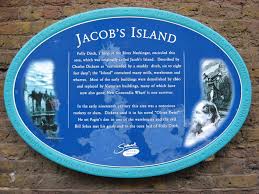
He visited one centre of the epidemic Jacob’s Island on the South Bank of the Thames in Bermondsey. An extract from his report is below.
Jacob’s Island still exists (rather different now to how it was in 1849). The Wiki entry is below. It is in fact located very much in same area as what (present events allowing) is currently known as the Bermondsey Beer Mile.
I believe Des de Moor’s beer tours of the area feature Jacob’s Island so when they resume there is an ideal reason to visit.
https://en.wikipedia.org/wiki/Jacob%27s_Island
Henry Mayhew Morning Chronicle 1849
The history of the late epidemic, which now seems to have almost spent its fatal fury upon us, has taught us that the masses of filth and corruption round the metropolis are, as it were, the nauseous nests of plague and pestilence. Indeed, so well known are the localities of fever and disease, that London would almost admit of being mapped out pathologically, and divided into its morbid districts and deadly cantons. We might lay our fingers on the Ordnance map, and say here is the typhoid parish, and there the ward of cholera; for as truly as the West-end rejoices in the title of Belgravia, might the southern shores of the Thames be christened Pestilentia. As season follows season, so does disease follow disease in the quarters that may be more literally than metaphorically styled the plague-spots of London. If the seasons are favourable, and typhus does not bring death to almost every door, then influenza and scarlatina fill the workhouses with the families of the sick. So certain and regular are the diseases in their returns, that each epidemic, as it comes back summer after summer, breaks out in the self-same streets as it appeared on its former visit, with but this slight difference, that if at its last visitation it began at the top of the street, and killed its way down, this time it begins at the bottom, and kills its way as surely up the lines of houses.
Out of the 12,800 deaths which, within the last three months, have arisen from cholera, 6,500 have occurred on the southern shores of the Thames; and to this awful number no localities have contributed so largely as Lambeth, Southwark, and Bermondsey, each, at the height of the disease, adding its hundred victims a week to the fearful catalogue of mortality. Any one who has ventured a visit to the last-named of these places in particular, will not wonder at the ravages of the pestilence in this malarious quarter, for it is bounded on the north and east by filth and fever, and on the south and west by want, squalor, rags, and pestilence. Here stands, as it were, the very capital of cholera, the Jessore of London—Jacob’s Island, a patch of ground insulated by the common sewer. Spared by the fire of London, the houses and comforts of the people in this loathsome place have scarcely known any improvement since that time. The place is a century behind even the low and squalid districts that surround it.


Leave a Reply