
The 1830 Beer Act and Henry ‘Orator’ Hunt
Henry Hunt who had been the speaker at Peterloo on 16th August 1819 was a farmer and for a period 10 years or so before Peterloo he owned a brewery producing what would now be called organic beer in Bristol.
While Hunt later ran a range of businesses that specialised in producing non-excisable alternatives to taxable ones for a radical audience he clearly retained a love for beer and pubs.
The Malt Tax passed in 1816 had made beer more expensive and led according to E P Thompson in the Making of the English Working Class both to a decline in beer consumption and a rise in home brewing.
Thompson notes that some felt that the Malt Tax was an ‘incitement to revolution’. When in the 1830 Britain came close to revolution, it was repealed and replaced with the Beer Act.
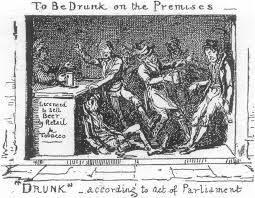
This allowed houses selling only beer to open with minimal regulation. Thompson reports that by 1835 35,000 Beer Houses had appeared from nowhere.
From 1830 until 1833 Hunt was MP for Preston.
On 31st May 1832 the Durham MP Arthur Trevor sought agreement to bring in a Bill to make conditions for Beer Shops stricter:
leave to bring in a Bill to amend the existing enactments relative to the sale of Beer in Beer-shops. He was aware he should have several prejudices to contend with, in combatting a Bill which was considered a boon at the time. He had, however, for some time watched the operation of the Act which had been passed for placing the sale of beer upon a different footing from that upon which licensed victuallers were placed. From all that he had observed, the alteration had been productive of increased drunkenness and disorder, and he thought that the time was arrived when some amendments ought to be made. The evidence of the Magistracy and the Clergy, in districts both great and small, and even of some of the working classes, was, that the great number of these beer-shops, spread over the country, led the labouring people into idleness and drunkenness, which, not unfrequently, was the means of the consummation of crime
Hunt opposed the change in the following terms:
opposed the Bill, and expressed a wish that beer-shops and public houses might be placed on the same footing; and, above all, hoped that the power of licensing, as hitherto exercised, would not be allowed to remain in the hands of Magistrates, lay and ecclesiastical.
In short Hunt wanted less regulation of Beer Houses not more, knowing they were meeting places for radicals.


We should have lived in such days