
Epidemics and their impact on society in the Nineteenth Century
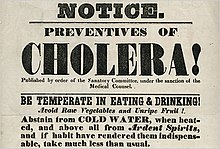
The extract from an article Asa Briggs wrote for the historical journal Past and Present almost 60 years ago was one of the first to look at the impact epidemics, particularly cholera, had on nineteenth century societies. It is essentially a lengthy review of pioneering work by the French academic Louis Chevalier that suggests a range of issues for further research
The research subsequently took place and there is now a considerable literature on the subject. Even so Briggs initial summary (below) rings true and has relevance for 2020. Until the 1880s what gave rise to cholera was poorly understood at best, and work to remove the conditions that allowed it to thrive and spread was limited.
It was a disease of society in a more profound sense also. It hit the poor particularly ruthlessly, thriving on the kind of conditions in which they lived. Whenever it threatened European countries, it quickened social apprehensions. Wherever it appeared it tested the efficiency and resilience of local administrative structures. It exposed relentlessly political, social and moral shortcomings. It promoted rumours, suspicions and at times violent conflicts.
Asa Briggs Cholera and Society in the Nineteenth Century, Past and Present, 19, 1961


Leave a Reply