
The nationalisation of pubs in World War One. An idea whose time has come again?
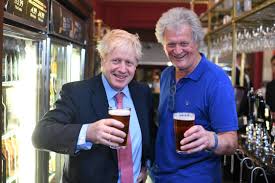
As Wetherspoons announces a plan to re-open its pubs in around or June (we’ll see…) perhaps its time to keep in mind the many calls that a post-COVID-19 world should not be the same as it was before.
Wetherspoons might be an ideal opportunity..
Among the long-reaching powers granted to the government by the 1914 Defence of the Realm Act was legislation regarding the selling and consuming of alcohol.
Licensing hours, the time when public houses were permitted to sell alcohol, had become more restrictive following the Intoxicating Liquor (Licensing) Bill of 1872. With the introduction of DORA they became stricter still. New laws meant that pubs were forced to close during the middle of the day to prevent all day drinking. The new hours saw establishments open initially between midday and 2:30pm, before staying closed until 6:30pm when they would then stay open until 9:30pm. Failure to observe these strict licensing hours saw landlords lose their licenses and pubs being forced to shut down.
Further to these licensing laws, additional restrictions were brought in regarding alcohol. Beer in particular was ordered to be ‘watered down‘ to make it less potent and reduce drunkenness. Additionally it became illegal to buy drinks for other people, thus ending the tradition of buying alcohol in rounds.
Roger Protz has highlighted how this fitted into Lloyd George’s long running temperance campaign. His particular dislike I suspect was that while he was of course a Liberal most brewers were supporters of and funders of the Tory Party (The Beerage)
https://protzonbeer.co.uk/features/2020/04/09/beer-and-pubs-in-the-firing-line
The Carlisle State Management Scheme. I suspect only those of a certain age and people who live in Carlisle will have heard of it now.
During World War One the Government became concerned in particular about the impact of drinking on arms manufacture. Whether as Protz rightly underlines this was a genuine concern or just part of Lloyd George’s longstanding antipathy to beer and pubs is another matter.
As a result in 1916 the Government took control of pubs and beer supply in three areas. By far the largest was Carlisle where several breweries were shut and the remaining one became a State controlled one. The same applied to pubs in the area.
The plan was not to stop drinking but to control it. The pub managers had no interest in maximising beer sales and rules were introduced to underline the point. Between 1916 and 1919 ‘treating’, the buying of rounds was not allowed for example.
However the beer quality was thought to be good, and numbers of the pubs were redesigned by Harry Redfern, an architect influenced by William Morris’s ideas on arts and crafts. The State Brewery made a profit in every year it operated. It was privatised by Heath’s Tory Government in 1973 and bought by an earlier incarnation of Theakstons.
Given the quality and strength of beer that was brewed under regulations brought in by the Defence of the Realm Act in 1914 the State Brewery may have been an improvement, although I dont have details of the strength of beer produced at Carlisle in the early years of the scheme.
A music hall song on post-1914 beer makes matters clear however:
Lloyd George’s Beer, Lloyd George’s Beer.
At the brewery, there’s nothing doing,
All the water works are brewing,
Lloyd George’s Beer, it isn’t dear.
Oh they say it’s a terrible war, oh law,
And there never was a war like this before,
But the worst thing that ever happened in this war
Is Lloyd George’s Beer.
Buy a lot of it, all they’ve got of it.
Dip your bread in it, Shove your head in it
From January to October,
And I’ll bet a penny that you’ll still be sober.
Another area of operation for the State Management Scheme was the area around the Royal Small Arms Factory at Enfield Lock.
Four public houses and an off-licence were involved. According to the interwebs, the premises returned to private ownership in 1922-3. Three of the four have been identified Greyhound, Royal Small Arms Tavern (Rifles)- currently boarded up- and Ordnance(demolished 1920s). The fourth is tentatively identified as the Plough Inn, Sewardstone (a McMullens pub still open).
The Greyhound is a going concern run by Hertford brewer McMullen who note that they have owned the pub since 1923.
Where the beer came from for the Enfield pubs I haven’t managed to establish, perhaps it was sourced from the Carlisle brewery, but so far I have no solid evidence on that. It appears that the canteen built at the factory, in part to keep workers away from eating in pubs, was run by the brewers Trumans.
The current crisis is of course configured slightly differently. Many breweries are still brewing and there is no initiative to reduce quality or strength. However all pubs are closed.
Perhaps its time to have another go at a State Management scheme at least as a trial. How about nationalising Wetherspoons?
An earlier version of this post appeared on the Culture Matters website
https://www.culturematters.org.uk/
Carlisle State Management Scheme
https://thestatemanagementstory.org/


Leave a Reply