
205 years ago on 23rd April 1820 the Observer reported the Cato St Trial, broke the law & struck a blow for press freedom
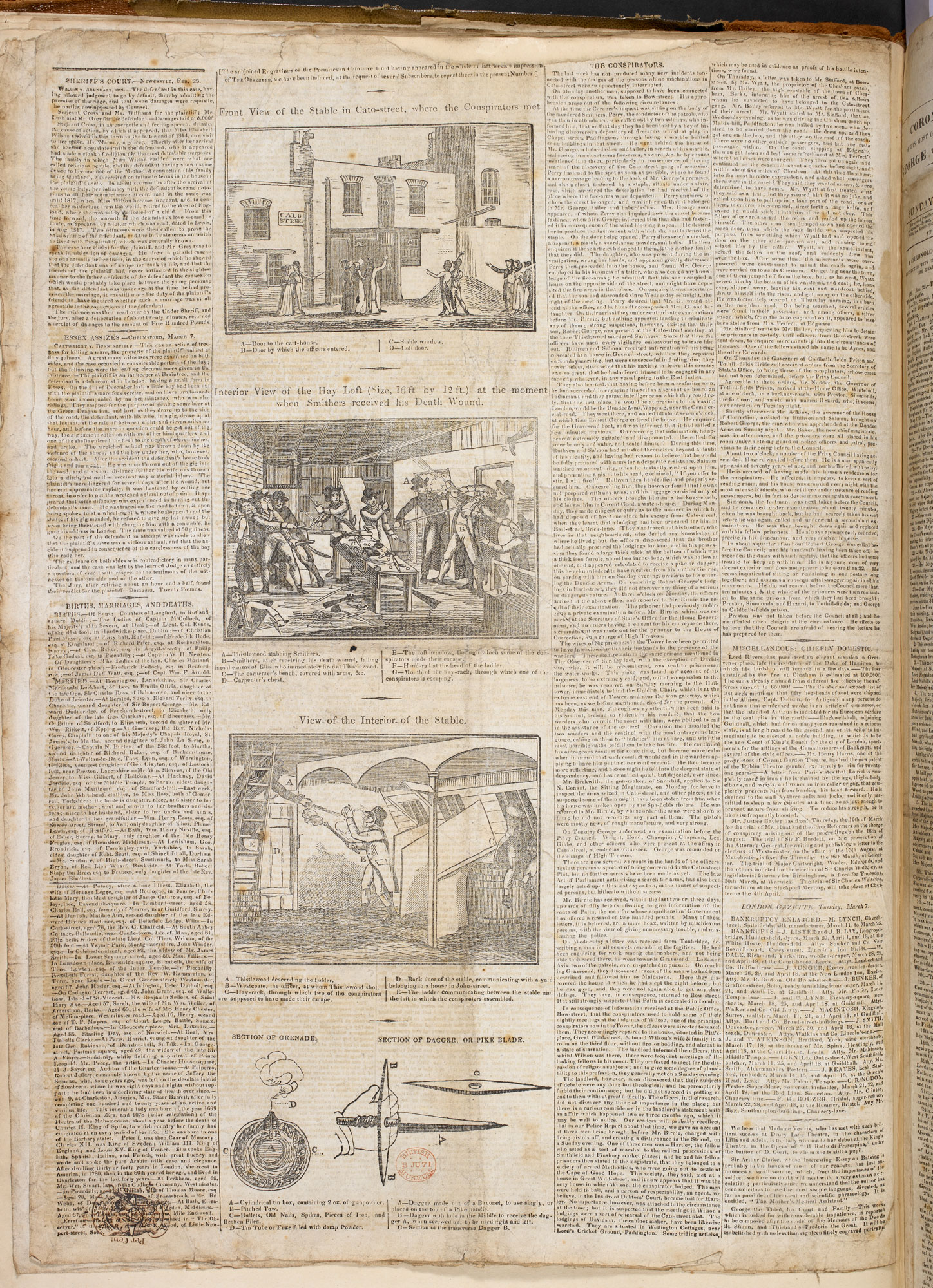
The Cato St Conspiracy was discovered on 23rd February 1820. It was part of a series of revolutionary attempts in the wake of the 1819 Peterloo Massacre.
Those arrested were tried in April 1820 at the Old Bailey.
Those accused including the leader of the conspiracy Arthur Thistlewood were tried separately.
The Government claimed that in order to avoid juries being prejudiced it was necessary to ban reporting of the trials until their conclusion.
This may have seemed sensible and operates still today. However the Government’s actual aim was nothing to do with protecting the jury. In fact the same jury was used in more than one of the trials and the evidence of State witnesses, carefully rehearsed, was the same in each trial.
The Government rather wished to avoid reporting of an uncomfortable fact. Namely that the aim of the conspiracy, to attack a Cabinet dinner, was the work of a Government spy Edwards. Edwards never appeared at the Old Bailey despite demands from the defence.
The Times published brief summaries of the trials as they took place but on Sunday 23rd April 1820 The Observer published a full account. The Editor W I Clement was fined £500 (almost £50k in 2025) for contempt and despite appeals the penalty remained.
The Government claimed they were protecting the jury while the Observer rightly noted that their action had quite other motives, namely as part of a campaign to suppress dissent after Peterloo.
The Cato St Conspiracy charges
- Conspiring to devise plans to subvert the Constitution. 2. Conspiring to levy war, and subvert the Constitution. 3. Conspiring to murder divers of the Privy Council. 4. Providing arms to murder divers of the Privy Council. 5. Providing arms and ammunition to levy war and subvert the Constitution. 6. Conspiring to seize cannon, arms and ammunition to arm themselves, and to levy war and subvert the Constitution. 7. Conspiring to burn houses and barracks, and to provide combustibles for that purpose. 8. Preparing addresses, &c. containing incitements to the King’s subjects to assist in levying war and subverting the Constitution. 9. Preparing an address to the King’s subjects, containing therein that their tyrants were destroyed, &c., to incite them to assist in levying war, and in subverting the Constitution. 10. Assembling themselves with arms, with intent to murder divers of the Privy Council, and to levy war, and subvert the Constitution. 11. Levying war.”


Leave a Reply