
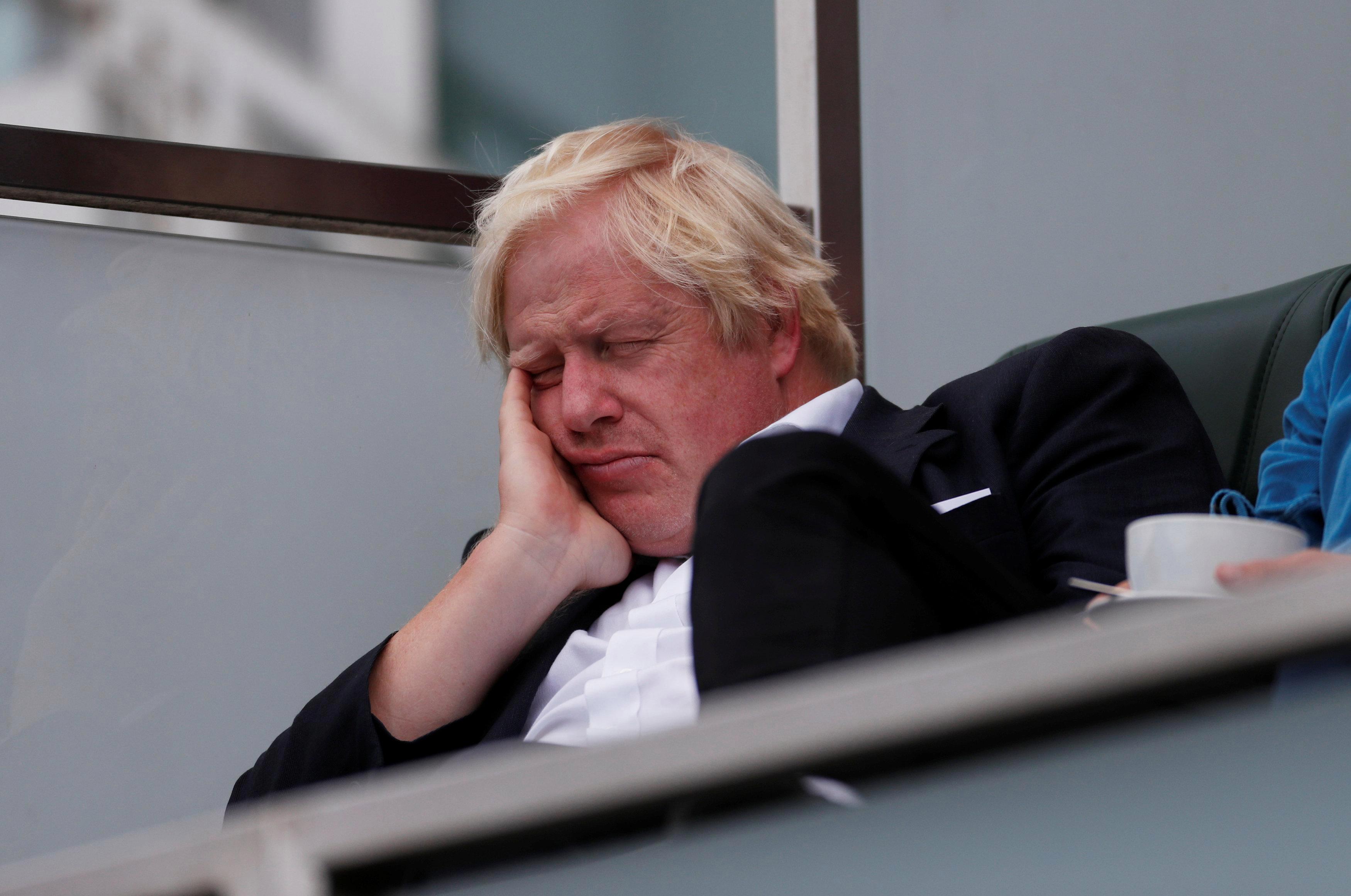
The Spectator is a right-wing weekly magazine that has been going since 1828. Its archives are certainly of historic interest.
I rarely glance at it, edited as it is by Fraser Nelson, not because I avoid right-wing views in some sort of left-wing bubble, but because the views expressed are predictable and can be checked by following some of the key writers on twitters any time you like.
As Dominic Cummings has found out recently things you’d prefer were kept quiet dont always remain so, so I should disclose that I have done stuff for the Spectator in the past. About beards. Period.
Boris Johnson is a former Editor, who was eventually disposed of when he picked up a Shadow Front Bench role under Cameron before the latter became PM.
Johnson’s Editorship of the Spectator was much as you might expect if you’ve following his brief period in No.10. Details are in Sonia Purnell’s entertaining biography, Just Boris.
On that basis you’d expect the Spectator to stand by Boris, and I suspect that broadly it still does.
However it has published another piece (on-line only,paywalled) by Scottish Editor Alex Massie calling on Johnson to go.
Massie has a beard but he is not some closet-Trot, even of the Institute of Ideas kind. He has an impressive pedigree of right-wing writing.
He calls on Johnson to go on the basis that he is not up to the job particularly if he has to rely on Cummings to the extent that he cant sack him. One suspects that Johnson had the same take on Stuart Reid the person who actually edited the Spectator while Johnson was nominally in charge.
Massie makes a particularly interesting historical analogy:
The Prime Minister’s defenders argue he cannot function without Dominic Cummings. Perhaps this is the case but it is not obvious he can function with him either. I do not, in truth, know if this is a Black Wednesday or Poll Tax moment for this government but the mere fact those comparisons are now being made is another data point supporting the proposition that Johnson’s government is in deep trouble.
The Poll Tax saw the departure of Margaret Thatcher as Tory leader, despite the fact that she had won the Party 3 Elections and the appearance of John Major. Black Wednesday on 16 September 1992 not long after the General Election that Major won saw interest rates rise briefly to 15% and paved the way for the election of Blair in 1997 and 13 years of Labour in Office.
There is important footnote here though.
The departure of Thatcher did not lead, in 1992,to a Labour Government led by Neil Kinnock even though that was an unexpected outcome. In 1992 the economic debacle caused by Tory Chancellor Norman Lamont meant Labour moved into a poll lead and kept. But Major hung on for 5 years allowing him to privatise rail and much else.
The end of Johnson would not, without effort, mean an end to Tory rule


Leave a Reply