
A return to pubs, & the Tory Beerage. Its not just Wetherspoons
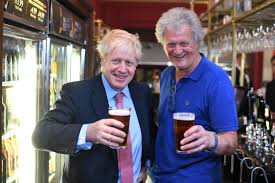
With some pubs in England set to reopen from July 4th there has been a social media campaign to boycott Wetherspoons and also a campaign by unionised Spoons workers not to do this as it will only give Tim Martin a further excuse not to address their concerns about working conditions and wages.
If you’ve been following the debate the next stage is to argue that this is all very well but nothing should be done to help Mr Martin.
The alternative, should you be a pub goer is to go elsewhere. That of course is how the market works
I wont be in a pub on July 4th or anytime shortly after but when I do go back it will be as before mainly to independent pubs and taprooms.
That’s fine of course but politically its for the few not the many. There are still plenty of places that don’t have such pubs and many particularly now will be looking for cheap-ish beer (with all the issues that has) which is not something you’ll usually find, understandably in an indy pub.
The problem with boycotting Spoons is at this it is a very partial measure.
Just last week one of the UK’s largest brewers Greene King ‘discovered’ that it had done very well out of the nineteenth century slave trade, changed its website and apologised. So perhaps don’t go to their pubs.
Craft beer doesn’t automatically offer a fully ethical alternative either. Greene King have done something. I may have missed it but I couldn’t see anything about black lives matters on the SIBA website.
The reality is that beer is inextricably linked still with what was known as the ‘Beerage’ which means the brewing interests of the Tory Party.
To address the matters means getting rid of the Tories politically I’m afraid.
The major British brewers, known as the Beerage, have been traditionally supporters of the Tory Party. The Liberals, by contrast, became the party of temperance particularly after Gladstone’s 1872 Licensing Act, when Liberals with beer interests largely departed for the Tories. In some places the now Liberal Democrats remain a party who take a dim view of alcohol even if mostly falling short of expressing temperance sentiments.
Of course in the modern world matters are not so simple. Very large UK brewers are often part of international groups who have no central interest in supporting particular political parties in a specific country. One thinks of the world brewing giant ABInBev whose recent record takeover of the South African owned brewer SA Miller, itself a global concern, took place on the London Stock Exchange. To this extent the concept of a Beerage matters less than it did.
Secondly donations to political parties have to be declared in a Companies accounts and while a hefty donation to the Tory Party may look fine when the Tories are in Office it is less helpful on the occasions when they are not.
Even so a list of business people who urged people to vote Tory in the 2015 General Election still reveals numbers of the usual suspects. These included:
Rooney Anand, CEO, Greene King
Ralph Findlay, CEO, Marstons
Andy Harrison, CEO Whitbread
Jonathan Neame CEO, Shepherd Neame
Michael Turner, Chairman, Fullers
Whitbread of course no longer brew but clearly old habits die hard. Individual support does not imply that the brewers themselves donate money to the Tories of course, and while this does occur the amounts appear to be relatively limited in recent times.
The wider issue is the link between a conservative working class culture, drink, pubs and, quite often, a liking for sporting events and betting on them. It suggested in Victorian times a way of life where there was little time for the trade union or left-wing meeting or protest, and one which accepts that the status quo is a reasonably congenial place in which to dwell.
The arrival of trade union organisation and some control over the length of the working day has provided for the possibility of beer, sport and politics all being pursued and again the old divisions are less significant.
In the Victorian period into the early twentieth century however organised labour and much of the left were strong supporters of at least a degree of temperance. There were attempts to divorce cultural pursuits such as the theatre and music hall from drink and efforts to control the drink trade and particularly pubs. There was a strong campaign for municipally owned pubs and indeed at the by the end of the First World War a State owned brewery was set up in Carlisle, a centre of arms manufacture, with tied pubs to control how much workers drank.
The numbers of small and micro-brewers continues to grow apace, helped by a tax advantage for those who produce relatively small amounts of beer. This change was actually brought in by Labour giving an interesting modern twist to the relationship between political parties and brewing.
However most recently medium sized regional brewers, but also including some of the larger ‘craft’ brewers who are now above the limit for the tax reduction have pressed for a rebalancing of tax so that they also have some advantage against the multi-national brewing giants like ABInBev.
In summary beer is political not just Wetherspoons
An earlier version of this post appeared on the Culture Matters site:
http://www.culturematters.org.uk/index.php/culture/dining/item/2533-beer-and-the-general-election


Leave a Reply