
Ed Miliband is right: Johnson is no Roosevelt.
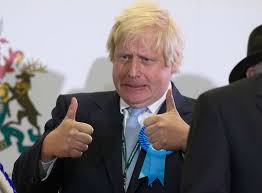
As most readers of this won’t need me to point out, Boris Johnson has decided to temporarily switch self-images from Churchill to FDR (Roosevelt) who was US President from 1933-45.
The context of course is Johnson mostly re-announcing existing spending commitments (one of his specialities)in an attempt to claim that this how he will avoid a post-lockdown recession. Commitments on jobs are notably lacking and as much to the point Shadow Business Secretary Ed Miliband has rightly called out on twitter that Johnson is no Roosevelt.
PM strategy is to hide totally inadequate commitments compared to scale of problem with FDR rhetoric and attempt to claim old answers of deregulation will solve problems. What we actually see is government unable to rise to scale of the economic emergency we face.
The historical detail is as usual complex and inevitably more complex than Johnson allows for.
Roosevelt did promote a New Deal from 1933 of public works and investment to boost the US economy. This was after many economies had begun to emerge from the 1929 slump but the US lagged. Car production had only reached the level of 1920 by 1938
As Eric Hobsbawm noted in the Age of Extremes car production-a key index of production then- in the US halved between 1929 and 1931 and wasn’t recovering as quickly as elsewhere. He also notes in a typically Hobsbawmist piece of detail that production of vinyl jazz records stopped altogether.
In the UK the National Government from 1931 with the backing of a significant section of what had been a Labour Government backed an austerity driven approach. Johnson isn’t really breaking from this idea but neither is he reinforcing it as some right-wing hawks would like.
Hobsbawm argues that while Roosevelt’s New Deal was radical compared to some (the UK for example) it was inconsistent and not enough to avoid a new slump in 1937/8.
Then came World War Two.
If Johnson is failing to address the matter entirely, Ed Miliband’s words are welcome in that they don’t echo the approach of Ramsay MacDonald in 1931. There is a need to understand though that while Roosevelt’s measures in the New Deal were radical they still weren’t radical enough.


“Vinyl jazz records”?
Surely all records were pressed on shellac in those days…