
Durham Miners Gala makes virtual history
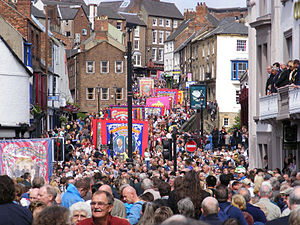
They seem to do celebrations and festivals better in other Labour movements in other countries, or at least that is the mythology that has grown up around the British labour movement. This year though the Durham Miners Gala (& Tolpuddle next weekend) are making history by appearing virtually.
These festivals commemorate the formative period of the labour movement from the struggles of Dorset farm workers to join a trade union in the 1830s to the industrial might of Durham miners from the late nineteenth century
Different struggles in different localities but ones that taken together form a history of resistance.
The specific forms of resistance, all focusing on a united fight for a better world, need to be understood in their own sense.
Around the pits of County Durham struggles for trade union organisation were underway in the 1840s and before, but unions were often short lived as battles with employers were fought and lost. However by the 1860s there was a stable union structure and in 1871 the first ‘big meeting’ of Durham miners, the miners gala was held.
It has continued ever since with breaks for the World Wars, the 1926 General Strike and the 1984/5 miner’s strike. Several things usually characterise the gala. Firstly the parade of banners from individual pits, many famously political, depicting figures such as Lenin and Keir Hardie. Secondly the presence of brass bands, a traditional form of music associated with collieries. Thirdly the speakers; down the years the Durham Miners Gala has been the key place for Labour and trade union leaders to speak. Every Labour leader bar one has spoken. The exception of course was Blair who never bothered despite being an MP local to the area. The famous names of British labour have spoken from Nye Bevan a former miner’s leader and founder of the NHS to Tony Benn, and, as importantly international speakers from struggles around world from South Africa to Chile.
The gala attracted as many as 300,000 people in the 1950s and it might seem to be an event dominated by men but the reality is rather different, There was also a tradition of a separate women’s gala and there was a crèche from 1937. Despite the fact that the actions of Mrs Thatcher means there are no working pits left in Durham the tradition of the gala continues. Attendances have been on the increase and new banners are appearing reinventing the festival as one of a celebration of community solidarity.
These festivals are of the left and a place for the left to argue it’s politics, but they are also about fun. There is a lot of respectability involved with the public culture of the British left but there are some unrespectable bits as well. Not only the music and dancing, but also in many cases the beer. We find in 1960 complaints that Durham pub owners were putting up the price of a pint on gala days such was the demand.
If you believe that the British left is dull and boring compared to that elsewhere getting along virtually to one of the great labour movement festivals this weekend and next might just cause you to think again. Solidarity can be mixed with some history and a good time.
I should add though that historically some of the time it did rain. Surely not this year though unless for some reason you’re logged on outside… https://www.facebook.com/events/263691018062514/


Leave a Reply