
William Cuffay (1788-1870). An important figure in the fight for the vote with no London memorial
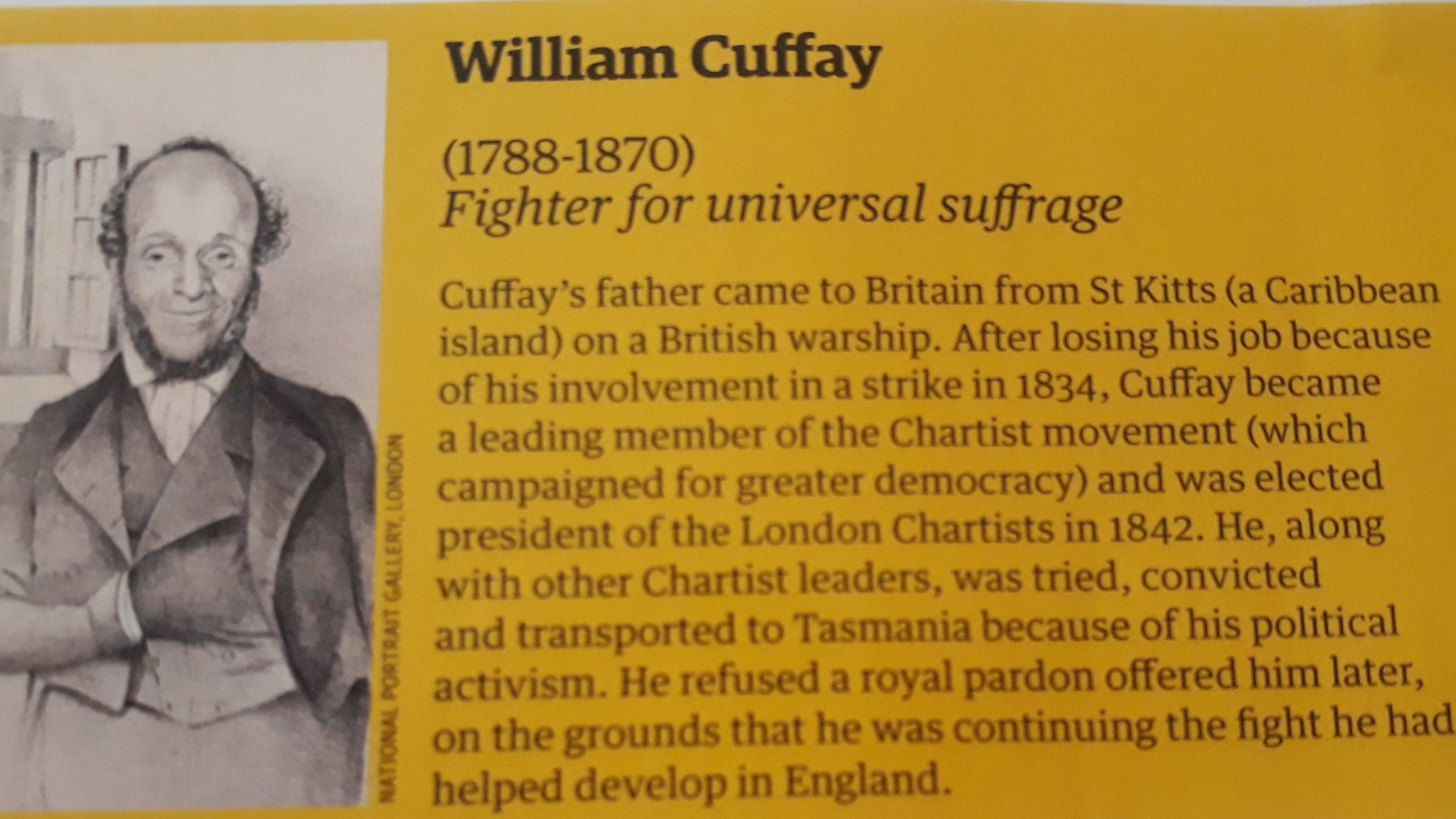
William Cuffay was born the son of a former slave in Chatham in 1788. He spent much of his life in London until he was sentenced to be transported to Tasmania in 1848. He remained there until 1870 when he died on 29th July, 150 years ago.
It was good to see Cuffay feature prominently in the Guardian’s Black History wallchart series on 14th July. It will bring not just his name but his importance in British history to more people. Yet there remains no London memorial to Cuffay despite efforts to put up at least a plaque.
It’s a reflection of how much still has to be done to make black history a central part of British history which whatever the likes of David Starkey may think it actually is.
Cuffay was the leader of London Chartism in 1848 and being 50 a very senior figure in the movement for the vote at that point. He was not a theoretician like, for example, Bronterre O’Brien, and left no written record.
What he was, was a very experienced organiser. He was the figure behind the huge Chartist rally for the vote on Kennington Common on 10th April 1848, and his view, without question reflecting the views of many London Chartists, was that the movement needed to be more confrontational in efforts to win the vote.
He was arrested and transported for his alleged role in a plan for an armed uprising in central London in August 1848. The reality of this episode is still discussed. He may simply have been victimised as a Chartist leader, he may have felt that he needed to keep an eye on what was happening or he may have been frustrated at a lack of progress and decided that revolt was the only way to proceed.
Whichever it was when he arrived in Australia in 1849 he didn’t give up or retire but continued to be a union organiser.
Someone who played such an important role in the fight for Parliamentary democracy might one think have warranted memorialising some while ago. But then Cuffay was a rebel and black man.
Let’s hope the Guardian wallchart at last inspires a successful effort to permanently remember Cuffay.


Leave a Reply