
A Year of Premier Johnson. From Moral Economy to Old Corruption
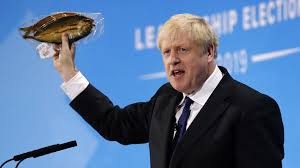
Boris Johnson, was crowned Tory leader and became Prime Minister a year ago. His reputation is as someone who says and believes whatever is convenient to him at the time as only been enhanced since.
During his Tory leadership campaign he made some play of his, for many, disastrous time as London Mayor and also he claimed he was a ‘one-nation’ Tory despite attracting the support of hard-right MPs like Esther McVey
In a pre-2015 General Election interview with the London Evening Standard, Boris Johnson, then London Mayor and Tory candidate for Uxbridge, spoke of his view of a ‘moral capitalism’.
It could be seen, perhaps, as the equivalent of David Cameron’s modern Conservatism, heralded before 2010 but now believed to be extinct.
Academically speaking, as he often reminds us, Boris Johnson is an ancient scholar so it is doubtful if he is aware of the moral economy that was central to the way Britain was run until the rise of industrial capitalism. It was then replaced by the political economy of Adam Smith, essentially capitalism with most of the moral bits left out.
The pre-eminent historian of the moral economy was the late EP Thompson. He argued that it represented a contract between an eighteenth century agricultural and industrial workforce and at least some elements of local ruling classes.
It meant that, for example, the prices and quality of staples like wheat, bread, and beer could, if need be, be legally enforced or at any rate influenced by crowd protests that were seen on all sides as legitimate (except by the forestallers or middlemen who sought to make profit out of unfair prices).
The moral economy here is a conservative traditional culture, sometimes enforced by radical means including on occasion, riot. It involved a recognition not that society was equal or should be so but that the poor were entitled at least to a basic standard of living.
Johnson’s interview with the Standard just 5 years ago had some of this understanding.
He argued that wealth creation by capitalists, whatever their intention, is the thing that helps to fund public services. He also said of those self-same capitalists that since they are making good profits they can afford to pay the London Living Wage and not expect the wages of their employees to be topped up by the taxpayer. This non-interventionist view did not survive furlough but quite probably influenced its premature end.
Johnson argued that there is a ‘moral purpose to wealth creation’. Adam Smith might have grudgingly conceded the point, the eighteenth-century crowd (who Johnson would probably call the mob) would certainly agree.
Was there anything in Johnson’s period as London Mayor that makes it appear that his moral economy for the twenty-first century is something that he would actually implement if he became a Tory Prime Minister? Despite his claim that London became a less unequal City there seems little evidence for it. His support for the London Living Wage was not for example matched by any actual action to get more employers to pay it.
Here he differs from his eighteenth-century predecessors. Not only did they support the notion of a moral economy they were, particularly in hard times, prepared to use the law to make sure it was enforced.
But in the last year, re-elected in December 2019 Johnson has moved from espousing when it suited him a vague moral economy to something more like William Cobbett’s Old Corruption. That is a politics where sinecures and placemen and women have a key part and where its not your ability to do a job that is important but who you are and who you know.
When we consider the letting of a variety of COVID-19 contracts to friends of the Tory Party, usually incompetently fulfilled, the ability to avoid doing anything about potential unlawful activity by key advisers and Ministers, or the fateful decision to delay lockdown at least in part as a nod to business activity related to Cheltenham races, its hard to avoid the conclusion that 12 months in Johnson is morally and perhaps politically corrupt.
In the nineteenth century the politics of Old Corruption were swept away with the 1832 Reform Act when revolution was narrowly averted. The next 12 months of Johnson’s Premiership, if he gets that far, may be interesting ones


Leave a Reply