
Epidemics, lockdowns & revolt. The nineteenth century conundrum of action or inaction remains
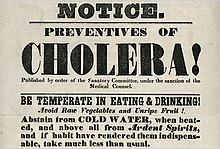
The Government in its usual chaotic and random manner is considering a further lockdown of some sort as COVID-19 infections rise again. The ‘debate’ such as it is hasn’t changed significantly since Governments attempted (or not) to control epidemics in the nineteenth century
There is a link between epidemics of disease, their impact and social unrest.
In pre-modern history plagues could wipe out significant sections of the population and create conditions for what is now known as ‘regime change’. The Black Death in 1348-9 is thought to have killed around 40% of the population in some cases for example, sparking social upheaval.
From the nineteenth century on this has been less the case. Societies began to be able to control and disease better. While successive epidemics of diseases like Cholera and TB swept the world in the 1800s-and in fact still do in some parts the globe- and large numbers died as a result, the proportion of now much larger populations impacted was more limited. Even the most severe cholera epidemics killed at local peaks 15-20% of people.
The relationship between epidemics, their impact on society and protest and change has been more complex in the last 200 years but a relationship there still definitely is.
Haiti Dictator ‘Papa Doc’ Dhuval was ousted in 1986 following popular unrest. This related to a rise in AIDS case in the country which put off visitors from the US, sensibly or not, and caused a collapse in the tourist trade, a central feature of the Haiti economy. The resulting job losses led to revolt.
This pattern can be broadly seen in nineteenth century cholera epidemics.
The two largest took place between 1830-32 and 1848-49. These were times of social change and revolution around the world. Wars and revolutions, also provoke population movements and refugees. This was a way epidemics spread in the nineteenth century and remains so in 2020.
The link between epidemics and revolution was a strong one at least in the mind of reactionaries. In France in 1849 some called cholera a ‘revolutionary infection’ seeing its spread as being caused by the ‘dangerous classes’ every bit as much as revolt could be.
More often though it was not revolution but riot and protest around epidemics and their impact that was seen. With job losses, poverty and lack of adequate food the issue was who to focus protest on. Governments were an obvious and relevant area with claims that they did little because they were not troubled by deaths of poor people. Sometimes it was medical authorities themselves who were faced with protests that they had not done enough. Much of this may seem rather familiar in 2020 as well.
Of relevance to 2020 is that while many Governments used similar techniques of control when epidemics first broke out-isolation, quarantine, control of movement, these didn’t ultimately work. That was because not only the cause of epidemics such as cholera was poorly understood but also because there was no effective medical remedy.
In 2020 we are in a different place. COVID-19 while a new virus is at least partly understood. There is however for the moment no vaccine.
When epidemics reasserted themselves as they invariably did, Government reaction was mixed.
Some, where they had the ability to do so- such as Prussia- implemented police measures which remained mostly in force long after the epidemic had retreated. Others did little. In Hamburg for example nothing was done because of the impact quarantine had on trade but also because police measures posed a threat to public order. Clearly deaths took place as a result.
Perhaps it might be reflected that the best way out of this conundrum is to find an effective vaccine if not to prevent an epidemic to control and restrict its impact. Fortunately in 2020 society is much better placed to do that than it was 150 years ago.
The key text on the subject is Richard J Evans, Epidemics and Revolutions, Past and Present 120, August 1988


But the earlier British working class movement was not 100% cohesive on the need to prevent epidemics and disease. There were once historical strains of similar irrationality to today’s anti-vaxxing in British left politics. An earlier time studying late Victorian socialist, trade union and “progressive” magazines and ephemera gave me a vivid picture of a movement that was quite often anti-vaccination (as it was seen to be imposed by upper class medical professionals on working people), certainly with a belief in spiritualism (seen as a logical extension of “scientific” Darwinism) via Labour Spiritualist Halls and the beginnings of what were the Theosophist movement and often an acceptance of what today we would see as eugenicist views. (I recall History Workshop once devoting an edition of HWJ to this area.)
Expanding on this theme, an article from the BMJ sheds more light.Anti-vaccination protests occurred across most of England .It was recorded that Ipswich, as well as places like Leicester, Henley-on-Thames and some mining villages in Northumberland had anti vaccination riots in the mid 1850’s in protest at the passing of the 1853 pioneer vaccination act. See (paste in browser bar) a piece from the BMJ from 2002 https://www.ncbi.nlm.nih.gov/pmc/articles/PMC1123944/ as well as an article from the Atlantic Magazine https://www.theatlantic.com/health/archive/2015/07/victorian-anti-vaccinators-personal-belief-exemption/398321/