
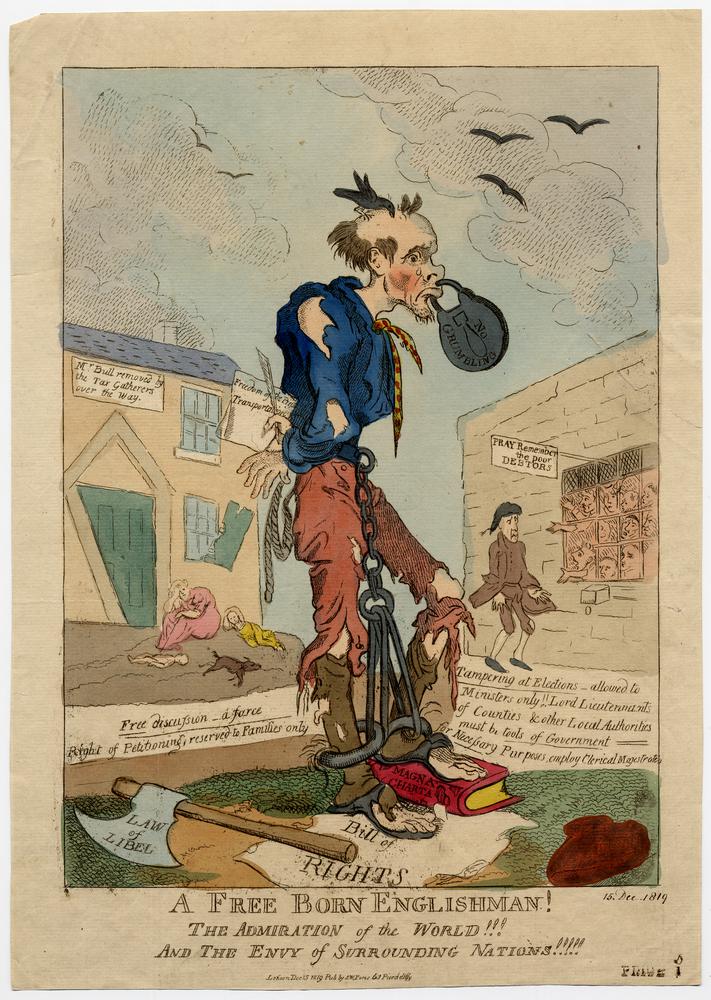
SpyCops, Starmer & the Freeborn Englishman
The decision of Keir Starmer to dictate a Labour abstention on the ‘SpyCops’ Bill in the Commons saw the biggest Labour revolt yet against his abstentions policy including front bench resignations.
The Bill in effect legalises illegal acts by undercover Government agents or spies as they are known historically.
Government spies have been used for undercover and often illegal purposes since the late eighteenth century. They were active around Peterloo in 1819 and the Cato St Conspiracy in 1820
This is not just a matter of history. Infiltration into and surveillance of legal radical campaigns and trade unions continues in the modern era.
Traditionally spies who were responsible for illegal activities would conveniently disappear- often abroad- before trials where they might have to appear.
It’s more difficult to do that now hence the ‘SpyCops’ Bill.
Neither what William Cobbett called the Freeborn Englishman or the forbears of the modern labour movement would be impressed that Labour Leader Keir Starmer abstained on the Bill.
The historian and activist E P Thompson was spied on by the security services after 1945 certainly up to 1963 (most MI5 reports on him are available at the National Archives). Perhaps needless to say Thompson was not involved in anything untoward unless you view trying to democratise society and advance socialist measures in that light.
Thompson however was the historian above others who revealed the origins of Government spying in the modern British State, discussing the activities of Oliver the Spy in the Making of the English Working Class. The State was concerned about the activities of the Luddites in the early years of the nineteenth century and sought to infiltrate them.
Thompson by contrast drew attention to the Freeborn Englishman, someone who cherished liberties, albeit limited ones, (for most the vote did not come until much later in the nineteenth century or even 1918). More particularly he did not like being interfered with either by his own State or by the agents of other States.
Thompson summarised the perspective in this introduction he wrote to the Secret State (1978):
In area after area, the ‘common people’ insisted that the civil rights of the ‘freeborn Englishman’ were not the privileges of an elite but were the common inheritance of all: freedom of press, speech and conscience, rights of assembly, inhibitions upon the actions of military or police against crowds, freedom from arbitrary imprisonment or unwarranted arrest and entry upon private premises.
He argued that The insurgent British working-class movement took over for its own the old Whiggish bloody-mindedness of the citizen in the face of the pretentions of power.
It would be wrong to suggest that either the Labour Party or unions don’t have and have had right-wing figures who are not sympathetic to civil liberties.
In 1978 the Labour Home Secretary Merlyn Rees deported the former CIA Agent Philip Agee and US journalist Mark Hosenball who had been exposing some of the less than savoury activities of the security services.
He also backed the prosecution under the Official Secrets Act of a former solider John Berry, and two journalists Duncan Campbell and Crispin Aubery who were investigating CIA links with GCHQ. It became known as the ABC case with significant public backing for the three.
Keir Starmer before he became Director of Public Prosecutions was a noted human rights lawyer. He defended the McLibel Two in a celebrated case against McDonalds where one of the defendants Helen Steel had been involved with someone later revealed to be an undercover police officer.
He used material from that campaign in his campaign to be Labour leader
One wonders if Starmer has ever read any labour history.
This post originally appeared in the Morning Star


Leave a Reply