
From the Lord of Misrule to the Feast of Fools: our Christmas traditions and theirs
The modern Christmas, aside from a festival of commercialism and invented Victorian tradition, amounts to Christmas Eve and Christmas Day, Boxing Day, New Year’s Eve and New Year’s Day with perhaps some note paid to Twelfth Night (Epiphany).
The actual religious traditions of Christmas are, as you might expect, some way from those that their supposedly modern-day adherents keep.
For example Advent was not about opening windows on a calendar but four weeks of a restricted diet (a semi-fast) where fish (often rotten) was the main food eaten as roast meat and pies were eschewed. Christmas Eve was a day of particularly strict diet with no meat, cheese or eggs eaten.
This is why Christmas Day and the twelve days that followed were days of feasting (at least for the rich).
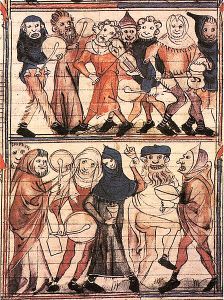
Before Christmas Day a Lord of Misrule (traditionally a peasant or at least someone of lower social standing than the senior clergy, was appointed to oversee the celebrations of which Christmas Day was the first.
Each of the Twelve Days had some festivity but the one that gained the widest purchase beyond Twelfth Night itself was the Feast of Fools, which took place around January 1st.
There is a long religious history to these events, all of which were eventually suppressed, but again I am hardly historically qualified to comment in detail on this.
More in my area of socialist history is the reason for their suppression. They had come to represent notions of the subversion of authority and symbolised however briefly the world turned upside down. In other words beyond the feasting and drinking was a practical demonstration of the modern slogan that ‘another world is possible’.
To understand what this was about it’s probably best to think in the context of Carnival and the Carnivalesque. This was a brief period when people were not what they seemed, might appear in disguise or play unfamiliar roles.
Moreover this was confined not to the clergy but reached out into the wider population. It originated with the Church because of the dominant role in played in early modern society.
There is a lot of detail on this in Ronald Hutton’s Stations of the Sun for those wanting to follow it up further, and a limited amount of original source material in manorial roles, official Church records and so on.


Leave a Reply