
Political Leadership in the labour movement: a homage to the ‘provinces’
The appearance of a Northern Independence Party reminds again (as it should) that real political power does not reside in Westminster
The left, wondering when it might next be in Office in central London has taken, not for the first time in the last 125 years or so, to wondering whether regional power bases might be a better way forward. Andy Burnham is running again for Mayor of Manchester. Sadiq Khan looks set to be re-elected as London Mayor. In Wales Labour continues to run the Welsh Government.
All these positions provide some real power with the chance to do things that (one hopes) can make life a little bit better for ordinary people. Not, unfortunately, revolutionary stuff but important.
Scale that up to Westminster and it all gets a lot bigger and a lot harder. If you’ve never had any experience of how to change things even a little bit, how it is done, and what obstacles there are, it can be difficult.
It is a point about Blair and New Labour and now Starmer. One wonders if Blair had had regional experience he might have persisted more effectively with his domestic agenda rather than getting frustrated and then distracted by launching wars abroad. Likewise if Starmer had more political experience at the grassroots he might be less inclined than to consistently dump on Liverpool or parachute candidates into Hartlepool. Perhaps I’m being too kind in both cases but experience does count.
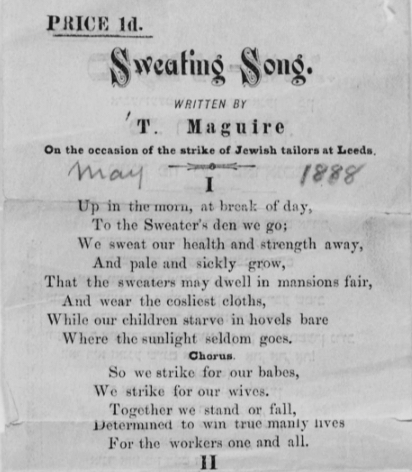
The point about where power in the labour movement really lies historically was made by EP Thompson in his 1960 essay Homage to Tom Maguire. Maguire was an ILP activist who died too young.
It appeared in Essays in Labour History, but is quite difficult to come by now (it was recently reprinted in the collection EP Thompson and the Making of the New Left edited by Cal Winslow).
Thompson makes the point that ‘provincial events are seen as shadowy incidents or unaccountable spontaneous upheavals on the periphery of the national scene’. But, Thompson counters ‘the ILP grew from the bottom up, its origins were in the shadowy parts known as ‘the provinces’.
Thompson was no huge fan of London, but argued that from the 1950s it had irreversibly won out over the provinces in terms of political power. Recent events underline that this was wrong, Thompson the political activist had fed back into Thompson the historian on the point.
Moreover since 1960 there is an argument that what is known as the ‘Westminster bubble’ means that parts of London itself are now seen as ‘provincial’. The quite regular pieces looking at what goes on in Islington North or Tottenham where I normally reside underline the point


Leave a Reply