
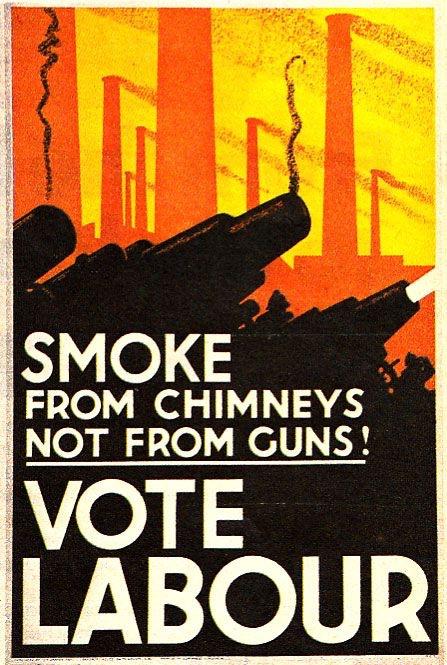
After Hartlepool: 1935 & all that
Labour’s defeat in the Hartlepool by-election together with, at best, a very mixed set of results in elections on 6th May, has sparked much discussion about where Labour’s politics should head to achieve the electoral ambition of booting out the Tories.
Keir Starmer it has become clear is not a great history man. He persists on blaming his own errors on Jeremy Corbyn, the Labour leader who Starmer himself did a good deal to undermine. More specifically he sometimes argues that the politics of Corbyn, which nearly won the 2017 Election, must be rejected because in 2019 they led to the worst Labour defeat since 1935.
David Edgerton, the Professor of Modern British History at Kings College tweeted before Hartlepool that this was a complete misunderstanding of what the 1935 Election was about and represented.
In the wake of the 1929 economic crash, the Labour Government had split in 1931. Ramsay MacDonald and a small number of other Labour MPs joined with the Tories to form a National Government. The plan, which remains familiar, was to make working people pay for the bosses crisis. The resulting General Election saw MacDonald installed as the Prime Minister of a primarily Tory Government. Labour was reduced to 52 seats such was the impact of the split.
By 1935 Clement Attlee was Labour leader and the picture in the Election of that year was of a significant Labour revival. The Party increased its number of seats from 52 to 154 and took 38% of the vote compared to the Tories 47%. That represented a 7% increase in Labour’s share of the vote.
The Second World War intervened before another Election could be held but the result of the 1945 Election, a Labour landslide, remains a significant moment in British labour history.
Comparisons between the 1935 result and that obtained in December 2019, quite frequently made by Starmer and allies, are not only wide of the mark but historically inept.
In 2019 under Jeremy Corbyn’s leadership Labour won 202 seats with 32% of the vote. While this was a significant reduction from the 2017 Election, that result currently looks like a high-water mark in what had been a period of relative decline in Labour votes and vote share going back to the New Labour period. By 2015 when Ed Miliband was Labour leader the share of the vote at the Election in was 30.4%
There are no easy historical comparisons to make from all this but rather a series of questions.
Looking at 1931 the decision of the MacDonald and a few other Labour MPs to join the Tories wrecked Labour’s standing. Perhaps a point here is that when Keir Starmer backs a policy of Boris Johnson, as he often does, many electors wonder what exactly the point is of voting Labour. They either don’t vote or in some cases back the Tory candidate.
Another potential issue is the impact of what is known as Pasokification. Pasok was the social democratic party in Greece, which declined to near electoral irrelevance having failed over a period to offer sustained policy alternatives to right-wing Governments. This trend of electoral decline can be seen across Western Europe.
Jeremy Corbyn’s Labour aimed to halt this process in Britain by offering a clear social democratic alternative to the austerity policies of the Tories, which had also been largely backed by Labour.
The real comparison with 1935 is that when Labour got close to the Tories in 1931 it had a devasting impact at the polls. When a clear alternative was presented in 1935 the road to electoral success which led to 1945 was started on.


Possibly Keir Starmer put all his energy into law. Had not time for the wider picture.. Specialising too young fails people. Too much emphasis on a career path rather than an education.