
The left are internationalists not North v South warriors
The Tory Culture War which sees incessant media talk about a Red Wall of north of England Parliamentary seats that have been Labour since the 1950s or 60s, has a complex and interesting history.
The original motor was George Osborne’s Northern Powerhouse which did little or nothing to address issues of deprivation and poor public services. More recently a focus was on Brexit, where it was argued, with a degree of justification, that some Labour voters would not vote for a Party that backed Remain.
Jeremy Corbyn did a good deal to address this point successfully in 2017 but then came arch-remainer and former DPP Sir Keir Starmer.
Many of the ‘Red Wall’ seats were not Labour until after 1945 with many working-class voters supporting the Tories and divided on religious grounds. Labour successfully addressed these issues in the post-war generation.
In 2021 before Labour lost the Hartlepool election a Survation poll for the CWU found that there were high levels of support amongst voters for left-wing policies such as re-nationalisation of privatised services.
Alongside all this has been a current of thought that has argued that compared to the south of England, working class voters in the north are significantly worse off. This is at best a very partial truth. During the pandemic the area with the highest number of unemployed and furloughed workers was my own of Tottenham.
The north-south debate is not only a poor reflection of reality is not where the left has come from historically.
The Independent Labour Party was born in Bradford in 1893 and there was a reason for that.
Some of the key disputes of what is known as new unionism- organisation of unskilled or semi-skilled workers-were in East London, the dockers and the Matchgirls. Yet this new mood was not welcome in the London Head Offices of existing unions and indeed the TUC.
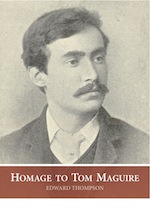
The new movement found political expression elsewhere. As E P Thompson wrote in his essay ‘Homage to Tom Maguire’ this was to be found in those ‘shadowy parts known as the Provinces’. Maguire was a Leeds tailor who helped organise the ILP. For Thompson it’s foundation in Bradford was a positive development moving away from London-centric control of the labour movement.
When moves towards founding a Labour Party started the matter was of considerable importance and the political career of Keir Hardie underlines how it was addressed.
In 1888 Hardie became the first Secretary of a new Scottish Labour Party having had a background in trade union organisation. By 1892 Hardie had stood for and won a Parliamentary seat in West Ham as a Labour and Liberal candidate. The ILP being formed in 1893 Hardie became a member. In the 1900 Election he stood in Merthyr in South Wales and again won a Parliamentary seat.
Hardie laid down the template at the very beginning of the modern labour movement that it was not where someone came from that mattered but that their socialist politics reflected and represented working-class interests.
Further to the left John Maclean had the same approach. His politics were a complex mix of Scottish republicanism and socialism and he was appointed Soviet Consul to Scotland by Lenin in 1918.
Some years earlier Maclean had spoken to thousands of miners in the Rhondda, South Wales, during the Cambrian miners strike in 1910. The miners were syndicalists but Maclean urged on them socialist organisation.
Traditions and ideas vary but there is still a basic working-class unity. Artificial divides like north and south aren’t progress.
This post originally appeared in the Morning Star


Leave a Reply