
E P Thompson d 28th August 1993: ‘the working class did not rise like the sun at an appointed time. It was present at its own making’.
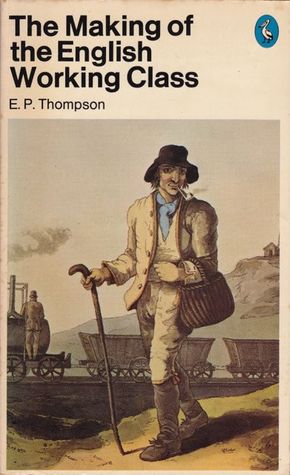
These are the words that begin the Preface to E P Thompson’s Making of the English Working Class published as a hardback by Gollancz in 1963 and then as a Penguin paperback in 1968. It remains in print.
Thompson was born on February 3rd 1924 He died on 28th August 1993 aged 69.
Almost 30 years after his death his work remains much referenced, not least perhaps some of the ideas and concepts he was most associated with such as the moral economy and time-work discipline. Both are central to the Making because they were central areas of contention as the world’s first proletariat was in the process of both being made and making itself.
Thompson was a socialist, long term peace campaigner and author of several other important history books such as Whigs and Hunters, and the collection, Customs in Common.
Thompson’s wider position on class and class formation remains an important statement. Class is not a static category, it’s something forged in the heat of the struggle.
https://en.wikipedia.org/wiki/E._P._Thompson
I belong to a later generation of socialist historians to Thompson. While I’ll occasionally had a beer with him or a discussion about history and politics in his later years, I never knew him well.
All the same time I still recall vividly when I heard of his death on that late August day in 1993. I was on holiday in Scarborough. This of course was long before the era of 24 hour news and social media. His death was briefly reported on a Radio4 news bulletin.
Much discussion of his work has taken place since and as the 60th anniversary of the Making of the English Working Class approaches no doubt there will be more.


I’m from Halifax, where Thompson wrote ‘The Making of the English Working Class’. Although there have been some valid criticisms of the book – such a where were women? – this was a highly significant work. It had the effrontery to argue that even people who didn’t have lots of money were entitled to a history. I suspect this subversive attitude was why he never received the accolades his work deserved.
Just came over from Michael Rosen. Still have the book from early 70s, though I forgot this anniversary. Our daughter is working through family genealogies. Measured in grandfathers and grandmothers it is not so long ago. Flax weavers impoverishe in Norfolk, early Black Country brick makers and we guess the young girls carrying clay, men transported to Australia; even dissenting religion and early Chartism.