
Afghanistan: Starmer ignores Suez & the Chilcot Report on Iraq & backs Blair
In recent weeks Keir Starmer has argued that the left needs to look to the example of Tony Blair to see how it can find ways of returning to Office. He didn’t mention the Iraq War and since the Occupation in Afghanistan ended in short order Blair has merely reiterated his love of endless warmongering on his website.
When the Commons debated the matter on 18th August Starmer struck an interventionist note. He said in part:
…a wider strategy, developed with our UN security partners and our NATO allies, to apply pressure on the Taliban not only to stamp out a resurgence of terror groups, but to retain the liberties and human rights of Afghans. We must work with Afghans and neighbours to ensure that there is consistent pressure…
Clearly ‘pressure’ ends up meaning bombs and troops. After the end of the first New Labour era in 2010 subsequent Labour leaders Ed Miliband and Jeremy Corbyn, took the point made by successive Stop the War Coalition protests that the focus in such matters should be on aid and help for refugees not on military action.
Starmer is ignoring the lessons of Iraq 2003 but he has also passed by the important principles established by another right-wing Labour leader Hugh Gaitskell after Suez in 1956.
In July 1956 Egyptian leader Nasser nationalised the Suez Canal a key trade route. In late October Israel, Britain and France decided to invade Egypt to seize control of the canal. It ended in failure a few days after it began. It was not supported by the US and neither did it have the backing of the UN. Importantly Gaitskell opposed the war using the slogan ‘Law not War’ something one might think would appeal to ex-lawyer Starmer.
Britain’s role in Suez saw anti-war demonstrations and even some strikes.
The lessons from this were twofold. Firstly that Britain could not embark on military interventions without US support. Secondly that there must be UN backing for them too.
When it came to the Vietnam War in the 1960s while Harold Wilson helped the US in a number of militarily related ways he did not actually commit British forces on the ground in Vietnam.
Blair’s ‘humanitarian interventions’ in a number of countries bypassed these points but ended up saving many fewer lives than they destroyed.
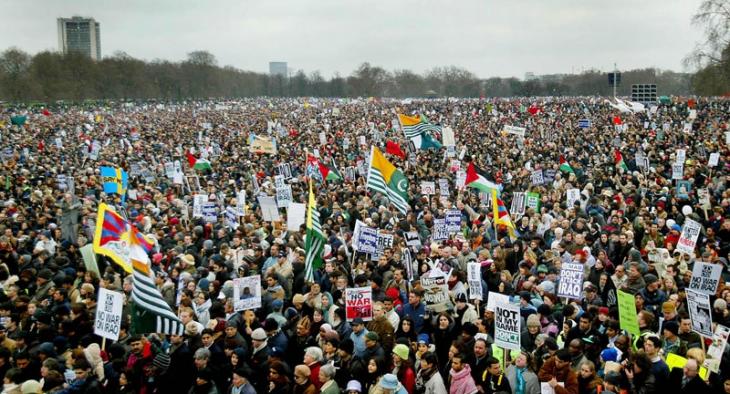
Just as with Suez Britain’s support for an illegal war saw opposition on the streets with the Stop the War Coalition organising the largest demonstration ever in British history, against war with Iraq on 15th February 2003.
While many on the left opposed the US and UK intervention in Afghanistan, as Jeremy Corbyn rightly reminded MPs in the Commons debate, Blair led it. 20 years on its clear, if it was not already, that the occupation had very little popular support. One might expect Labour to apologise and focus its efforts on aid and allowing refugees into the UK against the plans of Priti Patel. The last two may be done by Starmer but not the first.
The 2016 Chilcot report into the Iraq War underlined that it may well have been a lack of understanding of quite recent history, arguably a wilful one, that led then Prime Minister Blair into a false assessment of the role that Britain could and indeed should play.
One wonders if Keir Starmer has read that report? Alternatively he could just listen to the Sex Pistols God Save The Queen a key line of which is ‘there is no future in England’s dreaming’. Whether Johnson and Starmer like it or not the imperial dream is dead.
This post originally appeared in the Morning Star


Leave a Reply