
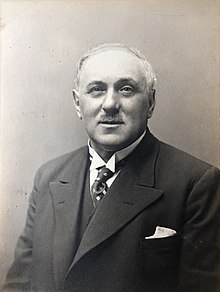
William Banfield: A Bakers Union Labour MP in the 1930s
The BFAWU, Bakers Union has decided to disaffiliate from the Labour Party with which it has been associated since 1902.
Some of the Labour right who don’t see the need for a link between Labour and the unions are no doubt quietly pleased (this doesn’t btw cover all the range of views on the Labour right).
The link between Labour and the unions has from the start in 1900 been a institutional one. So William Banfield (1875-1945) was a very long running General Secretary of the Bakers from 1915-1940
He was also the Labour MP for Wednesbury from 1932 until 1945.
Known as the ‘Baker’s MP’ he spoke hundreds of times in Parliament often raising specific issues on bakers working conditions such as working at night and on Sundays.
https://en.wikipedia.org/wiki/William_Banfield
The specific context of his election is of interest. Wednesbury had been held by Labour from 1918 but at the 1931 Election had gone to the Tories. That was because Labour had split with Ramsay Macdonald becoming Prime Minister in a National Government which aimed to make working people pay the price for the late 1920s world slump.
Banfield won the 1932 By-Election as a Labour MP, someone who opposed the austerity agenda and in fact the seat stayed Labour until it was abolished in 1974.
Banfield’s maiden speech in Parliament gives a flavour of where he was coming from:
Mr. BANFIELD May I crave the very kind indulgence of the House in making my first speech here. It is very fitting indeed that I should speak upon this Vote of Censure. My very presence in this House, as a matter of fact, constitutes a Vote of Censure on the Government. The electorate in my constituency were fully conscious of the fact that the mere return of one more Labour Member would hardly be sufficient to convert hon. Members opposite, but they were profoundly dissatisfied with the Government, they were tremendously disappointed with the work of the Government, and they registered in the only way they could their disapproval by defeating the Government candidate. The main reasons for the dissatisfaction were the fundamental problem of unemployment, the administration of the means test, and the general lowering of the standard of life which had gone on since the Government came into office. Twelve months ago people all over the country supported the Government in the hope that thereby some possible hope of prosperity would be brought into their lives. The fact remains that during the last 12 months unemployment has become worse, wages have been reduced, and poverty is more apparent, and probably never in the history of this country has a Government fallen from popularity so quickly as the present Government. When we take the Division, I suppose the Government will win, but if a vote of the electorate could be taken to-morrow the result would be very different. There is tremendous resentment over the administration of the means test, a resentment which is not confined to people who are unemployed. It is a resentment which is deep in the hearts of the people who are employed, and people in different stratas of society, including ministers of religion and all kinds of classes and creeds of men and women. They are resentful because they resent the pauperisation of decent people…


Leave a Reply