
Writing the history of the New Labour years. From PFI to Stop the War
History is generally accepted to start from 30 years after an event, even if sometimes it is too soon to say at that point what the impact of a particular event has been. Its worth noting though that in recent times many Government papers (although perhaps not the most interesting ones) have been released after 20 years
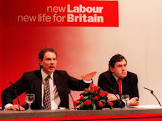
The beginning of the New Labour period in 1997 is moving towards the history books while the end in 2010 is still a way off in that historical framework. However attempts are being made by both the Tories and Labour and by many media commentators to assess what the legacy of New Labour is. The process isn’t helped by the regular ‘rare’ interventions by Tony Blair in public life either attempting to justify what he did or did not do as Prime Minister or seeking to persuade people that things would be much better if he was still in charge. Not many agree with that anywhere on the political spectrum.
Keir Starmer appears to be equivocal on the matter although given his less than commanding public presence people could be for forgiven for having missed that.
Starmer recently told the New Statesman that the reason why Labour still doesn’t get support from some was the decision to back the war in Iraq in 2003. Starmer noted that he had opposed it. On the other hand he has tried to reclaim the modest reforms of the 1997-2010 period, no doubt reminded by advisors like Peter Mandelson.
How far the changes of that time made a positive difference to ordinary people, and how far they simply ushered in greater private sector involvement in public services, something continued and magnified by the Tories, should be discussed more.
The decision to back the US invasion of Afghanistan in 2001 and then Iraq usually only features 20 years on in a framework that notes it didn’t really work out but was not that controversial at the time.
It was of course very controversial
The Stop the War Coalition which was formed in November 2001 is perpetually derided by right-wing critics and those who like wars as either pacificists or supporters of terrorism (it’s quite difficult to be both). Like any social movement it has its ups and downs in support. It is however still here and held a 20th anniversary event at Conway Hall in London on 18th September.
You might be forgiven for not noticing. While the recent withdrawal from Afghanistan marked the end of a 20 year strategy by the US, the UK and others, those who said it would all end in tears (and for many much worse than that) have not featured much in media coverage.
This tells you unsurprising things about the British media of course, points about its narrowness of focus that have been made many times.
The forces that came together to form the Stop the War Coalition- CND, the Muslim Association of Britain and a spectrum of the left held a meeting full to overflowing shortly after the invasion of Afghanistan started on 20th September 2001. The first demonstration, organised by CND, took place in London on Saturday October 13th 2001. I was at both.
With the invasion of Iraq pending the STWC organised what remains the biggest demonstration in British history in central London on 15th February 2003.
So it went on and goes on, protesting against Western military interventions but still often ignored by the media for whom the basic message of opposition to war was and remains an inconvenient one
After the Labour Conference in Brighton at the end of September a preliminary assessment of the New Labour years has some significance.
An earlier version of this post appeared in the Morning Star


Leave a Reply