
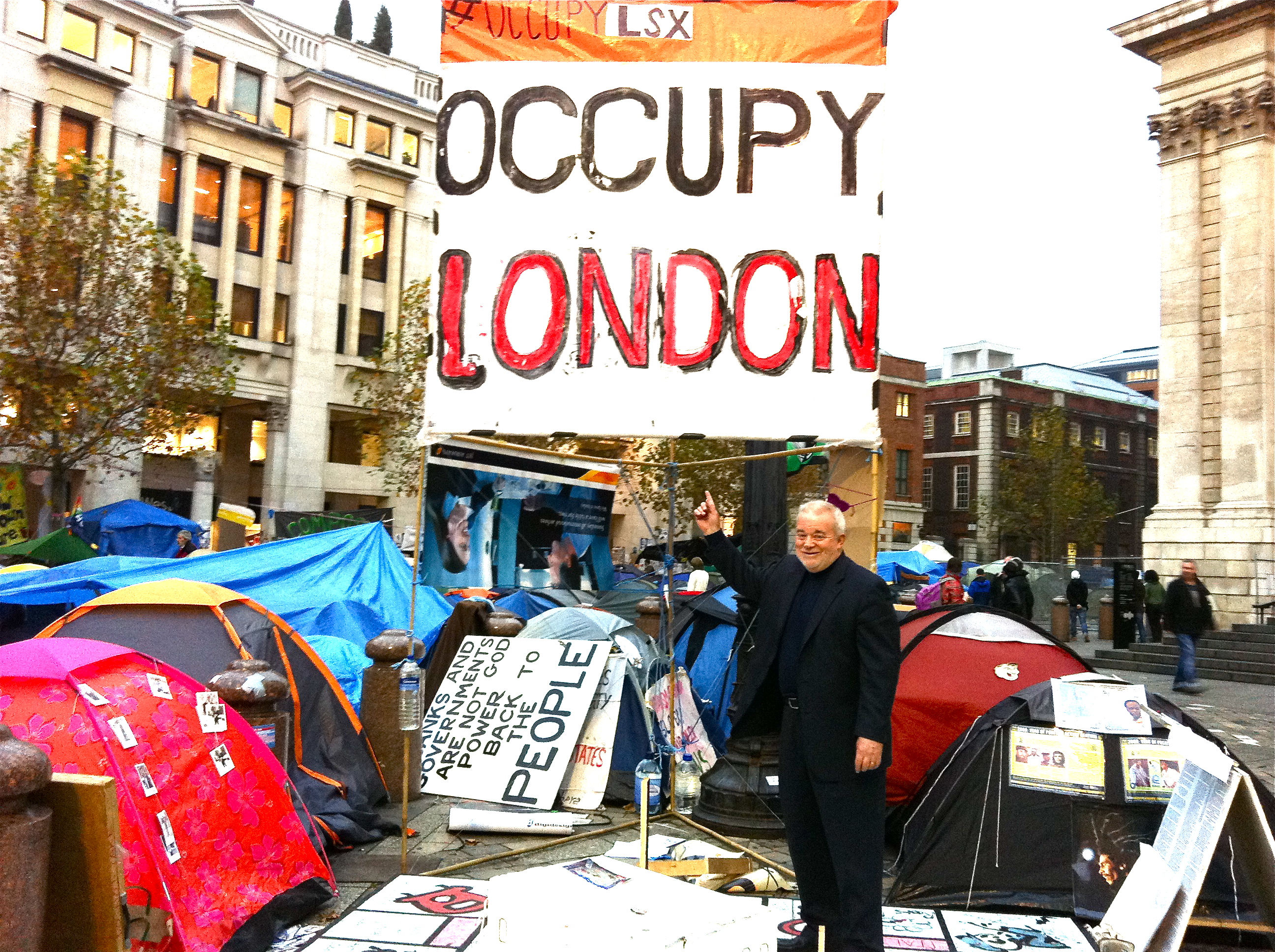
Occupy & the Historians 10 years on
The Occupy movement shook— if not exactly changed- the world—starting 10 years ago. It pulled in not only established activists, but also protesters appearing on the political stage for the first time, angry at a world where a small group causes a massive crisis and then expect everyone else to pay for it.
What should socialist historians say and do about this ten years on?
Firstly, there was and is a duty of solidarity, and there is a history to that. From Wall Street to St Paul’s, Occupy made protests in some of the central spaces of Capital and asserted the right of ordinary people to do so. The State reacted with varying degrees of physical and legal force. Free speech battles have been a feature of capitalist societies. In Britain much effort was put into fencing off and enclosing public spaces. Kennington Common where the Chartists gathered in 1848 is but one example. Modern commentators on London such as Iain Sinclair have emphasised how this battle for control over public spaces has continued right up to the present day. As the Occupy protesters discovered, pretty much everywhere in central London is ‘owned’ by someone who can tell people to ‘get orf my land’.
Historians also have other duties. A new movement seeks a history and attempts to understand history. There is a history of occupying space in recent times from the Upper Clyde Shipbuilders to Greenham Common and the Stop the War camp in Parliament Square. There is also the issue of what history can usefully be discussed and learned in the Tent Universities that were a feature of some of the Occupy spaces such as St Paul’s.
Occupy still suggests a major task for socialist historians. Not only to get out there and get involved but also to think about what history can usefully be discussed and how, with activists who are looking for an understanding of the history of labour movements, protest and activism. It is a history that should be informed by the disciplines of the seminar room, the library and the archive but driven by the requirements of an activism determined to confront neo-liberal capitalism. In a sense it is a little like the ‘counter-culture’ of the late 1960s which produced numerous texts and alternative reading lists. With a youthful memory of that and direct experience of the current Occupy movement, there is no question that the latter is more political and more focused on trying to understand how capitalism does— and more particularly does not— work.


Leave a Reply