
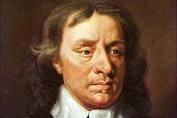
From Cromwell to Jacob Rees Mogg. Parliament on Christmas Day
Promising a vote on new Covid measures in the Commons on 30th November noted that they would be reviewed in 3 weeks when Parliament would be in recess for Christmas. Rees Mogg noted that only during the Commonwealth (1649-1660) had Parliament met on Christmas Day. If he really knew his Parliamentary history Rees Mogg might have noted that such a thing was no more popular with MPs in the 1650s than it is in the 2020s
My right hon. Friend is being a little unfair on the Government. He will recall, as he was part of these discussions, as was I and as was the former Secretary of State for Health and Social Care, that we assured the House that it would get to debate and vote upon important national measures. Bringing forward the debate tomorrow is a statement of how importantly I personally, and others in government, take that commitment that it is only right that this House should approve matters of that kind. There was of course a caveat in that agreement, which is that we needed sometimes to act during recesses. Mostly that has not in fact happened; we have been able to do this when the House has been sitting. However, I cannot give guarantees as to what will happen in three weeks, nor can I give them as to what the desire of the House will be—it was only Oliver Cromwell who made us sit on Christmas Day
Dr Stephen Roberts, editor of the Commons 1640-60 section, discusses the Commons’ debates on Christmas day, 1656: still sitting, of course, and rather disappointed that the rest of the country seemed to have taken the day off…
On Christmas day 1656, the second parliament of Oliver Cromwell’s protectorate met as usual to transact business. Some years earlier, the legislation of the Long Parliament (1640-53) had outlawed the observance of the festival, but it had evidently failed. On 25 December 1656, the MPs began the parliamentary day by giving a second reading to an obscure bill for holding sheriff’s courts in Wiltshire, heard amendments to a bill for altering the forest laws relating to the Forest of Dean in Gloucestershire; during the short debate, Luke Robinson spoke bravely against plans to re-forest the area, fearing for the rights of ordinary people: ‘We promised Englishmen freedom, equal freedom… Did we not make the people believe that we fought for their liberty? Let us not deceive them of their expectation.’ A government spokesman denied that the bill would restrain commoners’ rights, instead asserting that ‘it gives the people more liberty than they have had these hundred years’. The bill was passed, and then in what we might consider the true spirit of Christmas, a member was given leave to visit his sick child.
But the elephant in the chamber could be ignored no longer, and Colonel Joachim Matthews, Member for Maldon in Essex, noted how thin the attendance was, attributing it to Christmas observance, and produced ‘a short bill’ to reinforce the earlier legislation of abolition. Luke Robinson, the republican opponent of re-afforestation, complained that Christmas preparations outside his London lodgings had kept him awake all night, and made the inevitable link between Christmas festivity and Catholicism: ‘We are, I don’t doubt, returning to popery’. The bill produced a range of responses. Some said it was needed, as the people were keener on Christmas than on Sunday observance; others said that important parliamentary business should take priority over this measure, since it was too late to prevent this Christmas taking place, and so there was a year in hand to pass it. Yet others noted with regret the complete closure of businesses: ‘One may pass from the Tower to Westminster, and not a shop open, nor a creature stirring’. Lambarde Godfrey, MP for Kent, said that now the bill was being debated, everyone should support it, in case the public came to the conclusion that Parliament was in favour of superstitious festivals.


Leave a Reply