
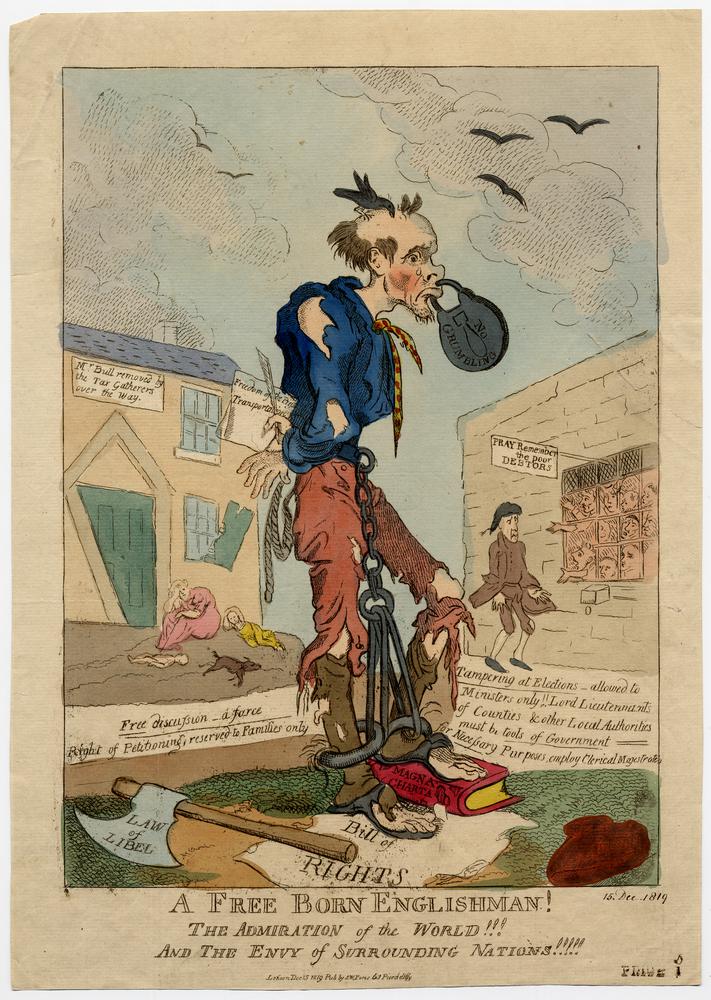
Tory attacks on the right to protest go back to the Six Acts in 1819. In 2022 protesting to survive will be essential
The Tories Police, Crime, Sentencing and Courts Bill was back in the Commons early in December. From earlier rounds Priti Patel added another 18 pages of illiberal measures to restrict and ban protests
The Bill is a ragbag of measures which proposes amongst other things a possible 10 years in prison for damaging a statue, rather more than the penalty for rape. It also gives the police even greater power to restrict protests.
The Tories have a long history of this sort of thing.
One of the Six Acts, which were actually formally passed in December 1819 after Peterloo, was the Seditious Meetings Act.
Under the Act all meetings of more than 50 people- in reality no more than 49 persons- were allowed. This included any meeting: “for the purpose…of deliberating upon any public grievance, or upon any matter or thing relating to any trade, manufacture, business, or profession, or upon any matter in church or state,”.
The only exception were meetings called by an ‘authorised official’. In addition a meeting of people in one specific area could be called provided permission was given by a Justice of the Peace. He of course required six days-notice. At such meetings no banners, flags or emblems of any sort were allowed.
While the Act was repealed in 1824 a related limit of no more than 49 delegates at any representative gathering remained in place through the Chartist period up to1848.
Indeed in order to try and avoid official interference in protest meetings, these were often held out of town in remote rural spots well away from the reach of the authorities.
It took many years of political organising by the trade unions, the Chartists and others to get rid of these restrictions. It is a perpetual fight but the perspective is important. That can be seen from the jailing of more Insulate Britain protesters this week and the trial of people in Bristol for participating in the pulling down of the Colston statue in the summer of 2020. In both cases the protests were ways of addressing things that just were not happening under the existing processes and that surely is one of the key reasons to take to the streets.
The Tories talk of freedom and democratic rights, in practice its actual defenders come from a rather different place.


Leave a Reply