
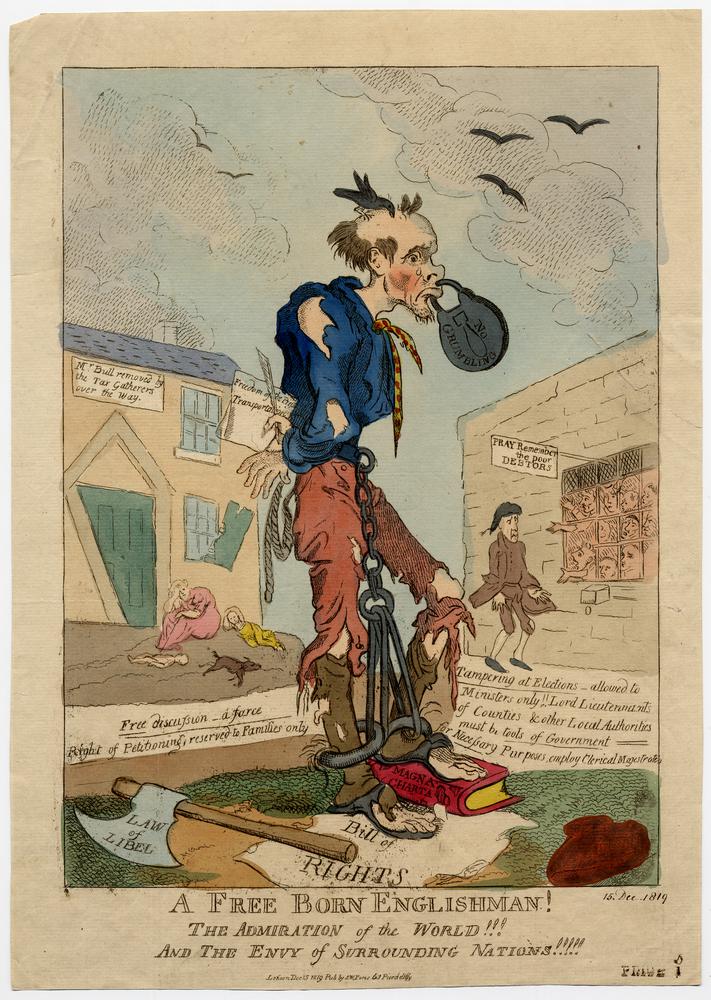
Trial by Jury, the Colston Four and EP Thompson’s Freeborn Englishman
While the left is rightly often sniffy about judges and the law the reality is that the jury system is at least potentially cornerstone of democratic practice. Most can think of jury verdicts they didn’t like but the jurors heard and reflected on evidence which critics mostly did not.
The Colston Four verdicts in Bristol on 5th January are a reminder why Governments continue to try and undermine the jury system.
Below is an extract from EP Thompson on the history of the jury system.
The jury system is, to a social historian, a very remarkable institution. Beginning as a group of knowledgeable persons (or ‘inquest’), who could report their findings to the officers of the Crown, it has survived immense changes in political life and administration – not as a fictive or vestigial sign but as an active element in the judicial process.
During its 800-year life it has shed some functions and acquired others, evincing a quite unusual flexibility – from ancient juries of presentment, the homages of courts leet and baron, and the Regarders and homage of forest courts, to the formalities of the jury box today. Even more remarkable, it is an institution, or presence, or tradition – which is it? – which is in some part secret and impervious to research. The actual deliberations of the jury may not be disclosed, and sustained accounts of them are few and imperfect.
What, indeed, is the jury? A legal expert may tell us how it is summoned, and, less exactly, what are its powers. But a social historian cannot be so certain. To be a juror is to have thrust upon one a temporary office, to which is attached an inherited weight of rules, practices and expectations; and this weight transforms an office into an imposed (and often internalised) role. This role is exercised for a day, or a week, or for three months, and then as suddenly as it was adopted, it falls away once more. Seen in this way, the jury is less an institution than a practice, or a place amidst adjacent judicial practices: a place through which generation after generation flows, inheriting the practices of their forerunners, yet inheriting these with little formal instruction, and practising the role in the light of expectations brought with them into the jury box and shared by the public outside.
Extract from EP Thompson Subduing the Jury. London Review of Books 4th December 1986


Leave a Reply