
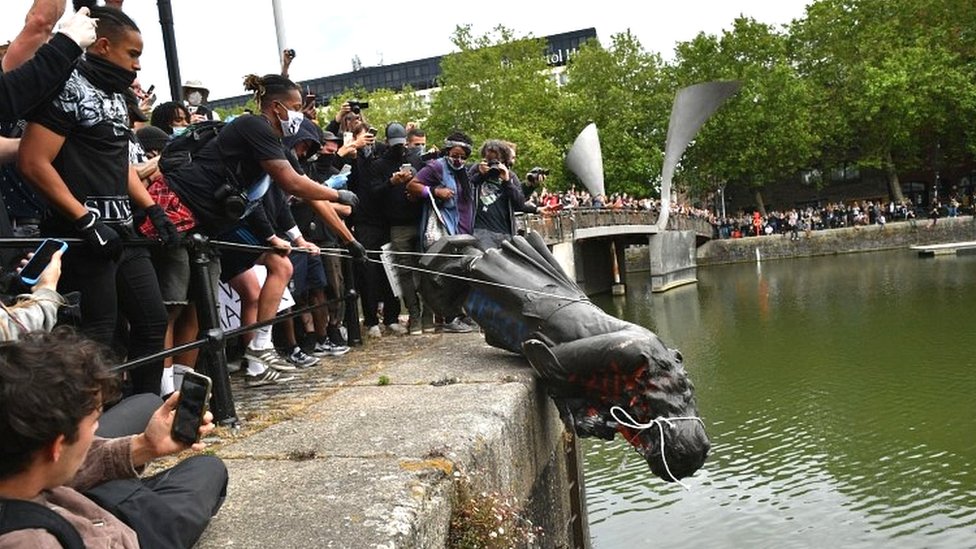
The Colston Four, the Jury System and the Rule of Law
On 5th January the Colston Four were acquitted at Bristol Crown Court. They had been accused of criminal damage, being part of the crowd who toppled the statue of slaver Edward Colston in the City in June 2020 and dumped it in Bristol harbour.
They had admitted being there but claimed a defence of it being morally right to take down Colston. By a majority verdict the jury agreed.
Juries have been annoying Governments since the seventeenth century- although very far from all the time- and the State has continued to attempt to put a stop to that. The majority verdict was introduced in 1967 with the aim not of making it easier for defendants to go free but rather to secure more successful prosecutions. In 1977 a range of cases were removed from jury trial-to be dealt with by magistrates only- and these included many public order offences.
One suspects that the main reason why the Colston Four ended up in Court was because of pressure from Home Secretary Priti Patel. Like most Tory MPs Ms Patel is clearly not good at knowing the British history they profess to be defenders of. There is a long history of juries acquitting in cases where Government interference is suspected.
For the left the British justice system is often seen as one designed to protect the rich where the poor struggle to get justice. At the same time there has been a continual fight to protect what space there is for people to actually get justice. The Rule of Law is designed to protect wealth but if its seen to do so too obviously that doesn’t work.
Hence the protests at Priti Patel’s current Policing Bill which is designed to restrict the right to do so and change the law so that more people end up in Court charged with offences the Government has made up to fit.
The Tory reaction to the Colston verdict underlined how some Tories grasp the point about juries and justice and some don’t. In effect a culture war has begun in the Tory Party over whether they respect trial by jury or whether they have given up on being the Party of law and order.
Leader of the House Jacob Rees Mogg intervened in a Commons discussion three times to defend the importance of the jury system calling it ‘the great protector of our liberties’. Meanwhile former housing Minister Robert Jenrick demanded that the Colston verdict should be reversed. He argued, incorrectly, that it meant people could now take down any statue legally. In fact the Colston verdict sets no precedent.
Boris Johnson in a rare moment of circumspection made no comment on the specific case confining himself to a defence of statues of slavers.
Until 1972 when anyone on the electoral roll was liable to be called for jury service, juries were confined to ratepayers (now the Council Tax) and so tended to be overwhelmingly middle aged, middle class men.
Jury decisions, particularly when the State ‘selected’ juries for political trials, often went against defendants. For example when William Cuffay the black Chartist was tried and sentenced to transportation in 1848, he argued that while he had no doubt the jury had considered matters fairly, they were not his peers. In fact they were 12 special constables.
The Colston verdict has to be seen in the context of the wider campaign against the Colston statue in Bristol and the support it has gathered. The jury were clearly sympathetic and historically that situation has worried the Government of the day.


Leave a Reply