
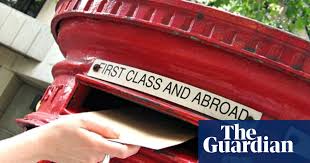
First Class Stamp to cost 95p. Is it the end for the letter?
The price of a first class stamp is to rise 10p to 95p on 4th April, with second class up from 66p to 68p. Royal Mail says that since the peak year of 2004/5,letter volumes are down 60%. However 7 billion letters are still delivered a year and to 3.5 million more addresses than existed in 2004.
Of course many of these letters are official comms from local Councils, the NHS and others are bills. It begs the question of whether the traditional art of the hand written letter still exists, whether between individuals or to newspapers.
My letters, or fletters as they are known (see also the Rosennote) have long since been sent by e-mail. My hand writing, even in the days when it was the main form of transmission for written communication was not the most legible. I still use the traditional letter format for e-mailed letters though.
Of course there are many other ways to electronically communicate, via social media, WhatsApp, IM, SMS etc. I use all of them but they are essentially for short form comms. My fletters often tend to be brief so that can work well but it raises a further problem.
As a socialist historian I quite often refer to the collected letters of Marx and Engels. There are a very large number although far from all have survived for a range of reasons. If they had not been in a written format the chances of them having survived for the best part of 150 years for historians to research would have been small.
There is a further class based point about the written letter. During the lockdowns in my area of North London there were many issues for the predominantly poor population. Those who were broadly middle-class would often send their points to the local MP by e-mail, while working class people tended to use the written letter. There could be a number of reasons for this, but one is cost. To send something electronically requires a device of some sort to write it on and a connection to the internet to send it. Both cost money, and when you are on Universal credit money is in very short supply. Sending a letter might often be cheaper, but it is about to cost more.
The letter is still with us and for the above reason at the very least is likely to remain so much as this will annoy authority who see cost saving in using only electronic forms of communication. As for historians, we have a problem..


They say that postage is going up because people are sending fewer letters…but that is one of the reasons that that is happening…apart from electronic messaging