
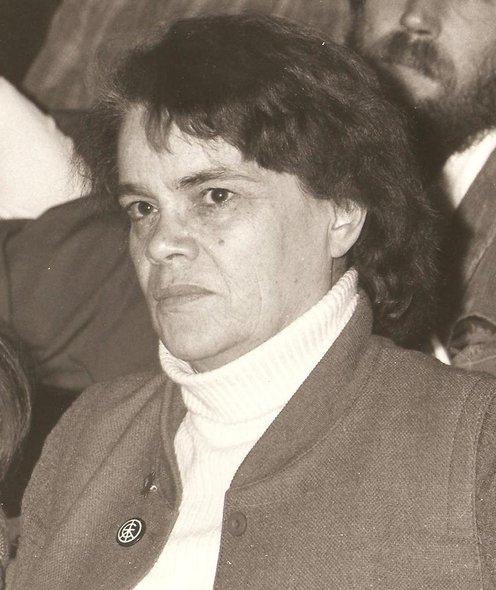
International Women’s Day: Dorothy Thompson on Chartism
The Dignity of Chartism
Dorothy Thompson
Verso 2015
Paperback ISBN 9781781688496
Hardback ISBN 9781781688489
It is reasonably well known that a key reason EP Thompson wrote on the English Working Class in the first and third quarters of the nineteenth century but said very little about the period from the mid-1830s to 1860s was that his long-time partner Dorothy Thompson (1923-2011) was working on the Chartists.
She published a series of well-regarded and in some cases definitive volumes on Chartism.
Yet until now there has been no collection of Dorothy Thompson’s writings in the area beyond the books.
Verso and the book’s Editor, Chartist historian Stephen Roberts, have done a considerable service in bringing some at least of Dorothy Thompson’s lesser known or more difficult to access pieces on Chartism together in a new book, The Dignity of Chartism.
It is a book which deserves to be read not least by the considerable worldwide group of those who work in the traditions of EP Thompson, though the research of Dorothy Thompson stands as a related but distinct contribution to our knowledge of working class history.
It does demonstrate some of the ways that the two historians worked together, sharing ideas and sources, which may have been previously less than clear.
Roberts in a useful introduction, revised from an earlier piece, notes that Edward Thompson mined Dorothy Thompson’s research notes for some parts of The Making of the English Working Class
While the hard to find pieces by Dorothy Thompson which the book contains will nevertheless probably be familiar to some historians and researchers, the longest piece here is an unpublished essay written jointly by Dorothy and Edward Thompson on Halifax Chartism. It was commissioned for Asa Briggs 1959 volume Chartist Studies but was never published.
It is the long piece (even with footnotes edited down) however that provides a guide to Dorothy Thompson’s research methods and the kind of history she wrote. It is led not by a pre-set framework but by historical evidence found in archives, documents, papers and books. It is also densely detailed with examples of what, in this case, Halifax Chartists were thinking and doing
An interesting web published piece on women and Chartism shows Dorothy Thompson while taking a feminist perspective defending Chartism as a class based movement and explaining again on a research based basis the way in which women were active in it.
The final piece in the book ‘Reflections on Marxist Teleology’ reflects a speech Dorothy Thompson gave at the launch of the memoirs of John Saville and reviews what in her view is relevant and not relevant in the relationship between Marxism and historical research.
The Dignity of Chartism reminds us of Dorothy Thompson’s place as a major post-1945 socialist and feminist historian. It also provides some fascinating insights into her collaboration with EP Thompson and suggests that her reputation should be regarded in the same perspective as his.
Keith Flett, May 2015,revised March 2022
Bibliography


Leave a Reply