
Not cancelling history but remembering it: International Women’s Day, still getting Hidden from History
International Women’s Day 2022 comes not so long after the 50th anniversary of the first women’s liberation conference held at Ruskin College, Oxford.
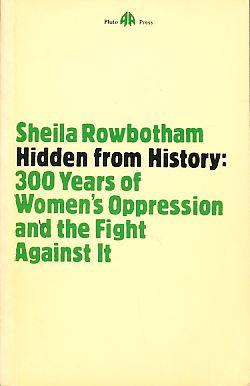
A key impetus for the conference came from a women’s history strand organised in History Workshop events in the late 1960s. A key figure in that was Sheila Rowbotham who has written a number of important books about women’s history including Hidden From History, a brief extract from which is below.
If historical memory is not refreshed what is known by activists in one generation can disappear in the next. How many will recall that one of the key figures behind IWD was the German Communist Clara Zetkin. A link below provides a brief summary of a London Socialist Historians Seminar on her writings from 2016
Likewise how well remembered currently is someone like Alexandra Kollontai a pioneering socialist feminist who served in the Bolshevik Government in Russia after 1917.
Much historical work as ever to be done.
The action of working-class women at work also forced trade unionists to take their predicament and determination seriously. From 1888 to around 1892 there was a considerable amount of spontaneous industrial action not only by men but also by women who had never organised before. The matchgirls’ strike is the best known because of the publicity the socialist Annie Besant gave it in papers and journals. However Commonweal, the paper of the Socialist League, reported several other incidents of female militancy in the same year. Blanket weavers in Heckmondwike, female cigarmakers in Nottingham, girls in a tin box manufactory in London, who pelted men who continued to work after they came out with red-ochre and flour, cotton workers, and jute workers in Dundee, took action spontaneously in 1888. The reasons for striking varied, from demands for increases to resistance to cuts, or opposition to fines. Again in 1889 mill girls in Kilmarnock came out over the bad quality of yam they were being given. At Alverthorpe, near Wakefield, woollen weavers, women and girls, rejected a reduced rate and marched in procession headed by girls with concertinas. This was broken up by the police, and the girls with concertinas-obviously regarded as ‘leaders’ -were fined for obstruction. Even waiters and waitresses demonstrated at Hyde Park in October 1889-though unfortunately they saw foreign. workers not their employers as their foes.
Sheila Rowbotham, Hidden From History 1973


Leave a Reply