
A new age of catastrophe?
A recent comment by Vladimir Putin that he was being cancelled in the same way that J K Rowling claims to be caused much social media comment. Of course neither individual is short of media to carry their often controversial thoughts. Putin’s main audience for the comment however was not Twitter users in Britain but a domestic one. Russia under his leadership is hostile to any display of sexuality that is not heterosexual. It is unfortunately very far from the only country to take this approach but Putin was making a comparison with what he sees as a more tolerant Western Europe.
However the reference to JK Rowling was interesting because it underlined the hypocrisy of Putin’s perspective. He contrasted Russia with a ‘decadent’ West but he and the very wealthy men and women who support him are often to be found as significant players in property, business and Tory politics in London. The current focus on Russian ‘oligarchs’ in the UK, which sometimes verges on Russophobia, reflects the point.
It also raises a troubling issue about Russia’s war on Ukraine. This is not a far-away event of which we know little. Beyond NATO’s activities in Eastern Europe, Russian, and indeed Ukrainian interests are an important part of the way capital works in Western Europe.
This was true in the period before the First World War. Engels spent many years in Victorian Manchester working at the German family firm and moved in the circle of German industrialists and bourgeois in the City. He was a member of the German Club on Oxford Rd. The links between German and British capital up to World War One were considerable.
That changed with World War One, where Britain became involved in an extended and bloody conflict with Germany. It was war for imperial advantage between rival imperialisms.
At one level the current hostilities in Ukraine are about that country seeking to protect its existence from Russian aggression. But at another level the involvement of NATO, controlled by the US suggests another conflict alarmingly similar to that which led to World War One.
US imperialism has been weakened by defeats in Afghanistan and Iraq and is now seeking to reassert its position against a Russia still weakened by the end of the USSR. Many commentators argue that the real concern of the US is the importance of China as world power and the threat this poses to what had been America hegemony.
Whether one takes that analysis or not, its difficult to escape the point that historically the intertwining of imperial rivalries makes a wider and even a world war more likely.
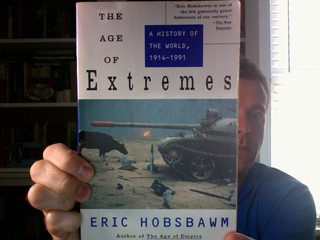
Eric Hobsbawm in his book the Age of Extremes wrote of the period between 28th July 1914 when Austria declared war on Serbia and 14th August 1945 when Japan surrendered as the Age of Catastrophe. It was he argued in effect thirty-one years of world war. He noted that the ‘short twentieth century’ from 1914 was one characterised by world war, ‘even when the gun were silent and the bombs were not exploding’.
Before 1914 there hadn’t been a major war for a century. Likewise while in 2022 there are many conflicts around the war including Yemen and Palestine, the Ukraine situation with the wider framework of Russia and the US, is the first conflict where potentially numbers of countries might be involved since 1945.
This is not an argument that current events in Ukraine will lead to a World War although there are plenty of warmongers who salivate at the idea. Rather its to suggest that historically the world is in a position where total war could occur again.


Leave a Reply