
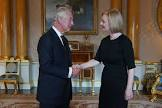
Their Democracy & Ours: Truss wins Tory leadership; Charles appointed King
Liz Truss was elected as Tory leader and hence appointed as PM (on Tuesday September 6th) beating Rishi Sunak by 57% to 43% of the 141,000 votes cast. The turn-out was 82% (it was largely an e-ballot) meaning the Tory membership is currently 172,000.
The 80,000 votes Truss got was rather less than the 85,000 CWU members in the post who have taken strike action over a 2% pay offer. That vote easily passed the 50% threshold of those entitled to vote which applies to trade unions but not elsewhere. Truss got 47% of the vote on this basis and were it a union ballot it would have been declared invalid as the TUC noted.
Membership of political parties is not high in the UK with the exception of Labour. Here membership rose to over 500,000 under Jeremy Corbyn’s leadership but had declined somewhat to 432,000 at December 2021. It may well be lower still now but easily dwarfs Tory numbers still.
The SNP and Liberal Democrats are the next highest placed in terms of party membership.
However you look at it appointing a new Prime Minister where the vast majority of the electorate have no say and not even a majority of the winner’s own party back them does not confer a high degree of legitimacy.
In fact the election of Truss is reminiscent of Parliamentary elections between the Reform Acts of 1832 and 1867. In this period very few people had the vote, and hardly any working men (women didn’t get the vote until much later).Elections went on for several days with open air hustings. Radicals and Chartists would often attend in numbers and propose their own candidate. On a show of hands they often own but of course most were not eligible to vote.
Even so this pressure from without had an impact and measures reflecting working class interests were passed from time to time in the Commons.
Just a few days after Truss became Prime Minister Queen Elizabeth II died at 96 sparking an official mourning and cancellation of events festival and Charles automatically became King Charles III at 73 years old. The record of his two predecessors does not inspire confidence. King Charles 1st lost his head on 30th January 1649 in pursuit of the Divine Right of Kings-meaning his authority came from God. That ushered in a period of republican Government after which came King Charles II. His dissolute behaviour- he had far more children than Boris Johnson has , did much to promote the ‘Glorious Revolution’ of 1688 which set the British ruling class on its modern course.
Because Britain is a constitutional monarchy rather than a parliamentary democracy King Charles III has a political role and one which will, based on his activities while Prince, amount to more than giving Royal Assent to Parliamentary Acts. He also has a role in the official State church, the Church of England. He was of course elected by no one and is accountable to no one-not even God since the monarchy abandoned the Divine Right claim a good while ago.
Whether the Tories can continue in Government and whether King Charles 111 can keep a monarchy going that appears fractured at best, despite what the bourgeois media has churned out in the wake of the death of Queen Elizabeth, will depend as it did in the seventeenth and nineteenth centuries on what popular protest can be organised from below.
The fight for a democratic society is also a fight to make sure the working class doesn’t pay the price of the energy crisis
This post originally appeared in the Morning Star


Leave a Reply