
Jacob Rees Mogg, Robert Peel & Tory Party splits
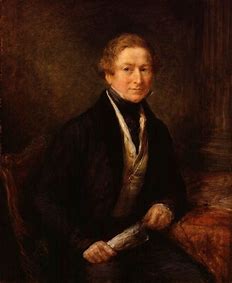
It might be assumed that as usual when Jacob Rees Mogg in 2018 compared Theresa May’s position on Brexit to that of Robert Peel on the Corn Laws after the 1841 Election he didn’t know what he was talking about.
On reflection (see below) that does seem to be likely. However Rees Mogg has a 2:1 degree in History from Trinity College Oxford in 1991. While I’m not sure if the syllabus covered nineteenth century British political history or indeed whether Rees Mogg was paying attention (ability to pass final examinations is a different question, although I can say that I rarely attended lectures during my first degree and still got a 2:1).
Peel was elected in 1841 with the backing of landowners who did not want the Corn Laws (a tax on imported wheat that kept domestic bread prices high, likewise profits for farmers) repealed but did in fact repeal them in 1846 with the backing of the Anti-Corn Law League. The working class, primarily the Chartists, were only marginally concerned pushing instead, in due course successfully, for a Ten Hours Act to reduce the length of the working day. A measure they correctly judged would have more impact on workers lives.
Rees Mogg argues that Peel’s actions split the Tory Party and they were out of Office for several decades as a result.
The Tory Party of the 1840s was hardly the one we know today (ok a few representatives may still be in the Lords). The modern Liberal Party was not formed until 1858 and the present shape of the Tory Party arguably was not fully defined until the early twentieth century. The second half of the nineteenth century saw several significant realignments in ruling class politics between Tories and Liberals.
Where Tories who face losing their seats as a result of the Trussketeers might go we may find out quite shortly
However if you are on the left the definitive view of what the Repeal of the Corn Laws actually meant for workers is below. As several commentators have noted it seems Rees Mogg would have been fully in favour
The English workers have very well understood the significance of the struggle between the landlords and the industrial capitalists. They know very well that the price of bread was to be reduced in order to reduce wages, and that industrial profit would rise by as much as rent fell.
Karl Marx Brussels January 1848
Dr Keith Flett convenes the Socialist History Seminar at the Institute of Historical Research, University of London, School of Advanced Studies


Leave a Reply