
Parliamentary Democracy & Legitimation Crisis-1820-2022
Looking at events of the last few weeks it is reasonable to suggest (though you might struggle to find the point in much of the media) that Parliamentary Democracy is undergoing a legitimation crisis.
The term was popularised by Jurgen Habermas of the Frankfurt School of critical theorists. Habermas broadly used it to look at how a Government run on the principles of a market economy dealt with a population that mostly preferred a moral economy. For Gramsci however legitimation crisis of Government took place when their hegemony over society fractured and was the basis for a political struggle
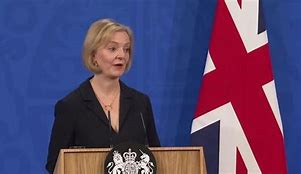
A bare majority of 180,000 Tory members elected Liz Truss as Tory leader and hence PM in early September. Within a month it has become clear that she is not capable of performing the role. Hence it appears there is talk amongst Tory MPs on who might be a suitable candidate to replace her. In short yet another PM without an electoral mandate.
The issues facing many on the cost of living, public services and housing suggest that a General Election is needed. Until one is called there remains a crisis of Parliamentary Democracy and its legitimacy.
It is not new. In 1820 after Peterloo in August 1819 when protesters calling for the vote and Parliamentary Democracy were cut down by the Yeomanry a series of gatherings around the country were held with a broad plan for rising. It didn’t come off but in the Making of the English Working Class E P Thompson noted the range of issues at stake:
Oppression of the Poor
Taxation
National Debt and was laid on the necessaries of life
The Corruption of Ministers and how many thousands a year were expended on them
Two hundred years ago but it sounds very contemporary


Leave a Reply